Friday, September 27, 2013

A honeymoon period

A little while ago, my husband damaged his back. This has meant a stay in hospital, followed by therapy and rest. After six weeks, he's finally returned to work full time, but he's still exhausted; this healing business takes time.

You'd think that I've been upset, anxious and afraid – not to mention exhausted, frustrated, and annoyed. But to my surprise, I wasn't, not at all. Cool, calm and collected more accurately described my state of mind. 'Right,' I thought, 'honeymoon's over. Time to get to work.' So I ran the household. We usually split the childcare, but I took on his kindergarten and school runs, and the hanging round the park between pickups. He usually cooks one night a week, but that couldn't happen, so I've done that too; and he usually does the grocery shopping, but not this month. The cleaning, washing and everything else are my responsibility anyway; and to cap things off the kids first got a virus, then threadworms, which meant washing extra linen and scrubbing the house.

On top of that I read a bunch of books and articles and wrote almost 5,000 words for university, and penned a couple of columns, and drafted and recorded half a dozen short pieces for a new project. So you could say I've been busy.

And it all felt fine.

Our relationship kicked off fifteen years ago, during a time of tumult. He was getting divorced, my mother was dying, we fell out with first one church then another, I had an abusive employer, he stepped up to a major new role at work, and so on. The first couple of years we were together were really, really hard. Things were just settling down when we had a couple more significant deaths, and our first baby, which really knocked us around; but the last seven years have been a breeze!

And at some level, I've been waiting all this time for the next thing to happen, because living on an even keel can't be normal. Now that something has happened – thankfully nothing too major – I realise I've experienced the last half decade as a honeymoon period.

So instead of being upset, all I can think is, what a lovely thing to realise about one's relationship!

Friday, September 20, 2013

Washing the dishes by hand

 
When my second daughter was almost a year old, we bought a dishwasher. I had chronic eczema on my hands, related to the many forms of washing that come with raising small children; using the dishwasher made a huge difference to my skin. I was pathetically grateful to be able to shove the baby bottles in and have them washed while I got on with other tasks. For five or six years, I sang its praises.

Now my kids are older, and we have moved to a house with a dodgy dishwasher. The machine fits relatively few dishes; then thunders away for an hour or so only to render the dishes less than half clean. We soon decided we had to replace it with an efficient, effective model. However, we haven’t had much spare cash this year; so until we can afford it, we have been washing up by hand.

To my surprise, we have discovered that it’s no big deal. Now we’re well past the stage of three little kids eating five meals a day, and the dreaded baby bottles, the washing up is no longer onerous. I’m beginning to realise that I don’t want to replace the dishwasher; instead, I just want to rip the faulty one out.

When we had the dishwasher, I used to spend a long time loading it, arranging and rearranging to fit the maximum in. It was like a three-dimensional jigsaw puzzle. Then I washed whatever didn’t fit. Now, I spend no time loading the dishwasher. The time I once used to load it is now spent just washing up. The things that went in the machine – cups, plates, bowls, cutlery – are quickly washed in the sink. The things that didn’t go in the machine – plastics, saucepans, knives, bread boards – I always washed by hand anyway. So rather than spend ten minutes loading the machine, then doing the leftover washing up, I now spend fifteen minutes doing the washing up, full stop. If anything, it’s quicker.

Our former machine was relatively quiet. Even so, you could hear it in the background for the hour or more it took to run through the cycles. Every evening was punctuated by swishes, gentle whirrs, and gurgles from the sink. Now, once the dishes are washed, the house is silent: no humming, no machine noise, no gurgles. I am enjoying the quiet.

We don’t have a dishes roster. Some nights, my husband and I do them after the kids are in bed. It’s not a bad thing, because of instead of going straight to our separate books or screens, we have a chat over sink and tea towels. It grounds us, and helps me feel like we are sharing the tasks of homemaking in a small, but not unimportant, way.

Other nights, we do them with the kids. We put on dance music and the kids wiggle their bums around as they dry. Sometimes, my nine-year-old washes. There are evenings when everyone grizzles about having to contribute, but they always step up in the end; ultimately, they can’t resist the music and the chance to dance with mum and dad in the kitchen!

Studies have shown that kids who have chores around the house tend to have good outcomes; it really is character-building. I reckon this makes sense: there’s nothing more demoralising than feeling useless. Yet we live in an age of labour-saving devices, compounded by a culture of perfection; and this seems to mean that many kids make no practical contribution to their households. At the extreme are the kids I know (aged 6, 7, even 8) who have looked at me blankly when I put out bread, butter and fixings; they have never been entrusted to make their own sandwich and don’t know how to start, let alone hold a knife.

My partner and I are too disorganised to assign formal chores to our kids. Occasionally, in a burst of good intentions, we give them specific tasks, but we rarely enforce them (and to those of you who have functioning rosters, I salute you!). However, the dishes have become something that the kids can do. It’s hardly the level of responsibility many children have, but it makes them feel useful, and communicates that they are contributors to family life.

The kids also set the table. With that job comes a privilege: to choose which plates we will eat from. I inherited a pile of old English crockery from various family members. The pile is constantly added to by my slight crockery addiction; I am forever picking up plates at op shops. But when we had the dishwasher, we rarely used the old stuff. It didn’t stack well in the machine; and I couldn’t bear to have the hand-painted designs worn off by the heat and powerful soaps. The crockery became a collection. However, since we began washing up by hand, we eat in vintage style. My kids prefer plates ringed with roses, or marigolds, or mixed bouquets - everything tastes better on a pretty plate!

The plates get me telling stories: about grandmothers, and families, and other houses I have known. Later, as we wash up, I keep remembering: the extended family and the meals we have shared; the view out the kitchen window of my childhood home; the sight of my father washing up every night; different group houses and their grotty kitchens; church kitchens and tea towel fights. And here am I, far down the great current of time yet still surrounded by a host of loved ones as I run water, squeeze soap, swish plates and scrub pans as has been done for time immemorial.

It may not be for everyone. But for me at this life stage, for the quiet, the ease, the opportunity for contemplation, the conversations I have with partner and kids, the dancing round the kitchen, the pretty plates, and the richness of the memories: well, I have fallen in love with washing the dishes by hand.

Friday, August 30, 2013

Failure and success

I never feel ‘successful’, whatever that means; instead, a vague sense of failure dogs me. It’s my own doing. Over and again, I have made choices to do what felt like the right thing, and which almost invariably moved me further away from conventional definitions of success. I’ve stayed home with kids for almost a decade; I’ve studied for love not employment; I’ve puttered around on blogs with no ambition or marketing plan; I’ve submitted writing to other outlets only occasionally and have barely tried to get published; I’ve never written a book or something ‘proper’; and now, when my youngest is almost ready to start school, I’m still not looking for a real job. Instead I’m studying again, this time for a higher degree in a field which I find fascinating but in which I see no prospect of further work.

Meanwhile, when I’m not studying, writing, cooking, or hanging out at the playground with a little one, I’m usually to be found in a classroom reading with kids. I’m not a trained reading recovery aide, just one of the countless mums who help out. Or I’m chopping veggies in the school canteen, or writing materials for my church community, or gardening, or doing something else for free.

As the feminist daughter of a professional woman, boy am I a failure. Despite my class, education and training, I’ve joined the great invisible unpaid workforce that keeps the world going. I don’t doubt that this is good work, but I am regularly assailed by the thought that I should have Achieved Something by now. Surely, to be a ‘successful’ person I should be earning a solid income, have results to show for my efforts, have a professional name. And I don’t. This idea of being ‘successful’ plagues me. Time and again I grapple with it, and time and again I reject it. But the rejection is never complete; slowly, the hunger builds once more, and I have to face up to it again. But why?

Perhaps the answer is found in religion. Garry Deverell, a brilliant thinker and theologian, has observed that we live in a deeply religious society. He isn’t talking about ‘Christianity’ or ‘Islam’ or ‘secular humanism’ or any of the other major faith-based observances. Instead, he understands religion to be the upholding of the cultural myths and assumptions that shape our values and our lives. In our society, one of those myths is ‘success’. More precisely, it is to be more successful – more highly educated, better paid, living in a bigger house with more stuff and a nicer car – than one’s parents; and this is what so many of us strive for.

My husband’s family is a classic example. Papa was a milkman who left school at 14 to accompany his dad on the milk run. His wife, Nana, worked as a tea lady to put their girls through high school and Dorothy, my husband’s mum, continued training to become a teacher. She married, and both my husband’s parents worked to put their boys through private school. My husband went straight to university, climbed another rung on the professional ladder, and became a lawyer. By most standards, this is a story of a successful family; and the story has, in fact, suited my husband well.

But when one lives differently, through choice or otherwise, the powers that be try to force you into conformity. Sometimes they attack from the outside, through the snide, diminishing comments of others; through the admonitions to get on board from conservative politicians and pulpits; though the social pressure of a particular milieu. Other times, they work from inside; the dominant powers become internalized, and they can do their most powerful work from within.

And this is, I think, what happens to me. Both my parents had postgraduate degrees. Moreover, my mum was a feminist trailblazer; and I must have been told a thousand times what a brilliant, incredible, gifted, prophetic woman she was. Then she died young: a life cut short, a tragic loss, God’s gift taken away too soon, blah blah blah.

I can’t possibly live up to her standards, let alone exceed them. To step out of her shadow I’d need to have written half a dozen bestselling books by now and have a fan club of thousands, and that sure ain’t happening! So I haven’t tried. I have deferred a career, if indeed I ever develop one, and instead I have tried to become a whole person, ‘living my prayer and praying my life’ as we say in our weekly church service.

It is, I think, a good way to live, but it comes at a cost: the cost of feeling like a failure; the cost of having to face up to that feeling again and again and tell it where to go; the cost of being criticized by others for not being a paid up participant in the workforce; the cost to my self-esteem (a sense of failure can be corrosive even when I understand how and why I feel this way); the cost of negotiating power and responsibilities in our marriage when my husband is very busy very important very paid and I’m not; and, of course, the cost of less household income.

These costs are the consequences of my choice to live in a way that is not improving on my parents’ lot and is not based on acquisition or wealth. I’m hardly a radical hippie, but even my small step off the hamster wheel has its price. A failure? In our society, with my background, how could I feel like anything else?

Yet life is full of paradoxes. The other day I studied for a few hours. I had ordered a book through an inter-library loan; surprisingly, it turned up as microfilm. So I had to re-teach myself how to use a microfilm reader, which was fun. Then I read like a mongrel. Book gutted, I headed to the shops and bought a swag of groceries; then I collected my youngest from kinder and we went home for lunch. Some good ideas swirled round my head as we hung out the washing and she chatted. We picked up her sisters from school, came home again, fooled around, cooked dinner, read stories, and went to bed.

As I lay there, I reflected that this smaller, less successful life suits me well. I move so sweet and fast that I often feel like I am dancing; even as I type, my hands float over the keyboard in swift and skilful play. According to my own lights and that of the world, I may be a bit of a failure; even so, I am surprisingly, even ridiculously, happy.

Thursday, August 15, 2013

Love your neighbour with dollies and eggs

I was in the backyard with my youngest daughter, pegging out the socks, when my neighbour’s head suddenly popped up over the fence. Her eyes were just visible as she told me that she had been given two dolls, dust collectors, and she wondered if my girls would like them.

***

You can read more when you subscribe to Mindful Parenting Magazine - the Winter issue is out now!

Tuesday, August 6, 2013

Childcare and takeaway are not enough for me

You know, I have this illusion that I’m the normal one around here. But every now and then I have a conversation which makes me realise that I dance to the beat of a different drum. Maybe you also dance to its beat; maybe you struggle to hear it amid the chaos of life – but if it’s not your drumbeat at all, you probably don’t read this blog!

Anyway, six months ago, we moved house. We didn’t move far; two miles, to be exact. But we moved from an unfriendly street to a friendly street; and, in particular, we moved to be a few doors up from some special people. Other friends, who hear our drumbeat, cheered us on; but many couldn’t understand it. And at the old school, which we attended for the last few weeks of term after moving, I was standing with a group of mums at pick up time when one of them asked me about the new house. ‘It’s great,’ I said, ‘we’ve been there a month and already we’re sharing a meal or two a week. The kids go back and forth a bit between the houses and so they’re more engaged and asking less of me.’ I was ready to say more – about Friday movie nights (for the kids) and wine (for the adults), say, or about sharing the lawnmower or the rice cooker or babysitting – when a woman interrupted. ‘What’s so great about that?’ she asked, slightly contemptuously. ‘Childcare and takeaway, that’s what you need; why would you want to get involved?’ And half the women in the group nodded, and looked at me as if I were the strange one.

And that, folks, is the moment I realised that we dance to different drums; and the drums are so different that I couldn’t answer her. While I stumbled for words, another woman cut in. ‘I can’t stand the idea of neighbours,’ she said, ‘I ignore mine, and always keep my big gates shut and locked.’

Thank goodness the school bell rang and the kids poured out, because I was flabbergasted. I just can’t imagine not sharing my life, especially as a parent. I feel suffocated at the idea of living with just partner and kids; the nuclear family is not enough for me. And when I think back to how important so many adults – friends and neighbours – were to my childhood, I can’t imagine raising my own kids without the same crowd of people in their lives.

Even more, I can’t see that purchased supports are any substitute for the shared life. While I’m not against either childcare or takeaway, and use them from time to time, they’re not enough for me. I also want old friends and new acquaintances and neighbours who hand food over the fence; I want to eat with many different people, and often.

Many Friday afternoons, the kids all play here while my friend-now-neighbour works from home and I cook up a pot of something; then the kids run down the street and flop in front of a movie at the other house. I follow a bit later carrying my big pot, and my friend and I tell stories of the week over a glass of wine while dinner cooks and we wait for our partners to come home. Together, then, we all eat and talk about work and writing and ideas and politics, and remind the kids of their table manners; then my partner and I whisk our kids home to bed.

Childcare and takeaway vs a glass of wine with a friend, an interesting conversation, and a two-household mutual admiration society? They don’t even begin to compare!

Monday, July 22, 2013

Work, Study, Housework, Homemaking: Some definitions


In my last post, I wrote about work-life balance. I've spent my whole adult life wondering about the nature of work; yet in that post I used the word without definition or clarification. Now I'd like to unpack it.

The day I wrote that post, I used the word to mean 'activity which is not directly related to managing children or the household'; that's what I always mean when I say 'work'. My husband works: he goes out of the house and does stuff which is not related to spending time with children, cleaning the house, washing clothes, or buying, preparing and serving food. Certainly the money he earns contributes mightily to the upkeep of the household, but when he is 'at work', he is not engaged in a hands-on way.

When I say that I 'work', I mean that I am studying or writing. I don't differentiate, when I speak, between all the aspects of 'studying' and 'writing', such as reading, mining bibliographies, meeting with supervisors or other students, attending seminars, collecting library books, sighing over crappy drafts, or gazing out the window wondering what the hell I'm trying to do. Nobody needs to know precisely what I do in those hours, just as nobody outside accounts needs to know when my husband meets with a client, drafts a document, ducks out for sushi, or gazes out the window wondering what the hell he's trying to do, too. Like him, I just say 'work'. It's easier that way.

So for me, 'work' is industrious activity outside the orbit of the household. Because I study, it's not financially remunerative; maybe one day it will be.

Why do these words matter? Quite simply, because language is powerful. I have found that if I say 'it's my study time', someone will always suggest meeting for coffee or doing an errand; and when my study times are measured in three hour blocks, this is disastrous. On the other hand, when I say 'it's my work day', nobody asks anything of me. We take 'work' much more seriously than 'study', even if the person using the word 'work' really, secretly, means 'study'.

It's magic! And it's crazy. Meanwhile, an old friend of mine recently worked out how much time she has spent breastfeeding her very young baby; it was many more hours than full time employment, and didn't take into account the time she has spent changing nappies, washing, or caring for her two-year-old. Yet her activities don't fall into our economic or political models of work, despite being physically and emotionally demanding, very time consuming, and of enormous benefit to society. Why do so few of us describe caring for young children as 'work'?

I cannot count the times I wanted to punch someone when they asked me, the mother of three pre-schoolers, when I was going back to work. If, as regularly happened, they went on to say 'it's such a privilege to be able to stay home', I'd have to sit on my fist. Caring for three young children always felt like work enough for me, especially as I often also cared for an extra child or two. If, however, I had been employed as a childcare worker – and put my own kids in paid care to do it – everyone would have given me a pat on the back for re-entering 'the workforce'.

Many mothers I know privately describe their paid work as 'time off'. When they're 'at work' they can concentrate with no interruption; they can grab a coffee and have a few minutes' peaceful contemplation; they can use their minds and training and see the fruits of their labour; they earn money and status because they are 'employed'; and they can pee alone. Once they collect the kids, they're feel like they're on a hamster wheel of taxiing, cooking dinner, listening to readers, washing dishes, bathing kids, tucking them into bed, putting on a load of washing, sweeping the floor, hanging the washing out, and preparing lunches for the next day.

I used to think these friends of mine were being funny when they described their jobs as 'time off', but now I have more time for 'work', that is, study and writing, I see how right they are. It is so affirming to do things which use a bigger skill set; I am beginning to feel like a fully-fledged adult. Study and writing and meetings and seminars do feel like time off (not to mention that blissfully empty time, the commute); even so, I jealously protect the time with the powerful word, 'work', to describe it all.

So what are the activities I rarely describe as work? Unlike my old friend, I'm no longer breastfeeding or changing nappies, thank goodness, but there's still the cooking (don't run in the kitchen, I'm using the big knife), cleaning (I only mopped yesterday, just look at this floor!), laundry (that's two outfits for the day young lady I don't care if it's dirty you're wearing it again tomorrow), washing up (how many cups did you use today???), taking children to and from kinder (where's your lunchbox?) and school (where's your helmet?) and piano lessons (didn't you practice???), braiding hair (I asked you to brush it), working in the school canteen (no you can't have a cupcake just because I'm here), reading with my kids (use a bookmark, not my shopping list/your shoe/a used tissue for god's sake!) and school kids, organising playdates (no you can't watch YouTube when you have a friend over), telling my kids to sit up straight and chew their food properly and put your knees down at once!, shopping for food and shoes and birthday presents, organising church suppers, pruning the roses, telling my kids to use a tissue and put it in the bin!, changing the sheets, overseeing tooth brushing, scrubbing muddy handprints off the walls, combing out nits (sit still!), calling and waiting for tradies, wiping down the benches, taking kids to the doctor and dentist and hairdresser, planting, weeding and watering veggies, reminding kids to put your damn clothes in the wash/away/does this floor look like a laundry basket?, managing multiple food allergies and intolerances (is that really worth eczema and stomach cramps?), feeding the school chooks and guinea pigs (don't squeeze the poor creature!), doing the family paperwork (when did your teacher give you this form?), fixing things (exactly HOW did you break it?), paying bills (do you think we're made of money?), and a thousand other activities.

Some want to describe all this as 'work' – and there are times when I do, too – yet I am largely reluctant to use that word. It's an uphill battle to reframe language. Most people use 'work' to mean 'job' or 'employment'; it's not automatic to use it for household duties. In any case, all these activities are about our primary relationships, and I don't want to reduce the enormous richness and complexity of running a household and caring for children to a set of economic activities, which is what 'work' usually suggests; family life is so much greater than that. Finally, paid work is not 'time off' or a pleasure for many people; it's the job they do so they can afford a roof over their heads and kids under the roof. To describe maintaining that home and caring for children as 'work' when those activities are experienced as a great privilege and a pleasure is, to many people, bizarre.

So I feel the need for another word. 'Housework' doesn't begin to cut it; to me, the word evokes a low heeled woman wearing a frilly apron and carrying a feather duster, and it completely overlooks all the relational aspects of caring for children and maintaining other household relationships. 'Housekeeping', too, doesn't quite fit because, like 'housework', the word is focussed on the physical structure of the house and doesn't provide for the people within it. If you employ a housekeeper, you also need a nanny; housekeepers don't care for children or anyone else.

Another possibility is the word 'homemaking'. It's a word that largely connotes women's work because of a social history in which women have spent the last however long as the primary workers in the home and carers of the people in it; in fact, some dictionaries go so far as to define it as a role some women (not men) adopt. And yet, on reflection, homemaking is not a verb which is intrinsically gendered: every man, woman and child engages in homemaking in some form or another.

Just think of the child who carefully places a pretty snail shell on a shelf; the man who takes out the garbage; the woman who sweeps the floor; the kids who build a cubby; and the baby who by her cries draws the household near. They are all homemakers, building the place where they live and shaping the relationships they have with the other people there.

So the home includes the place, and the objects and people within it; the members of the household co-create and maintain the place they call home through physical labour and relational work; and I can call this activity 'homemaking'.

I've found a word I can work with. I will continue to call any industrious activity outside the house 'work'; and all the things I do in and for the household I will call 'homemaking', instead.

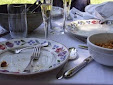
Re the picture: Query: Are the dishes work? Answer: Not for me. They're homemaking. And I must admit, I rather enjoy splashing round in the sink! But as for scrubbing the loo... blech. Counting for Nothing: What Men Value and What Women are Worth

Tuesday, July 9, 2013

How I came to own the philosophy of work-life balance naked, wet, at seven o’clock in the morning


I was in the shower, steam everywhere, when someone walked into the bathroom. I twitched open the shower curtains to peek and there was my four-year-old, sitting on the loo and swinging her legs. 'Hi Mum,' she said, 'we're going to the zoo. Are you coming?'

It was school holidays. My husband had taken two days off work to be with the kids and free me to study; apparently he was taking them to the zoo.

As the water pounded my back, I shook my head and said, 'No thanks, today I'll stay home and do some work.'

'Because it's more important,' she said wisely, then gave me a kind smile.

Such a dagger to the guts. I grew up in a house where my mother's work was more important than everything else, and didn't we know it. As children, we were given to understand that we were highly treasured and highly privileged; as such, other less privileged people needed her time more than we did, and we were never to complain. I often dreamed of having a stay-at-home mum, the sort of comfortable person who enjoyed being with me and who baked cookies. And yet, when I spent time with other people's stay-at-home mums, I often didn't feel very comfortable; and it wasn't actually something I wanted from the woman who was my mother. If she'd stayed home, she would have gone berserk, and driven me crazy in the process. She drove me crazy enough as it was.

But I resented the primacy of work in her life; everyone else knew her better than me. And my sister and I spent so much of our childhoods just waiting. We'd hang round church for hours, waiting for her to be done, and not allowed to leave without her; we'd hang around the house waiting for her sudden gallop through the hall, clutching a pile of papers and yelling at us to hurry up. We'd sit on the back step after school, hot, thirsty, and busting to pee, waiting for her to come home from wherever she was and let us in; for years, we couldn't have a key because she worried about 'latchkey kids'. (As to whether being a 'doorstep kid' is worse, I'm not sure; I certainly was happier when I could let myself and get a glass of water.)

I can see that the stressors on her were enormous. She was a ground breaker in her field and worked far more than full time, yet she was also never able to relinquish the idea of the 'proper mother'. Despite her work hours, she also tried to iron the sheets and make pizza from scratch and pretend that work had no impact on her children. I can see this and I feel sad for her; but I'm still not at peace with her choices. I have no problem with parents working, but they have to make good arrangements for their kids. So when my four-year-old asserted, very comfortably, that my work was more important than wandering around the zoo with her, I felt sick.

Was it true? I wondered. Did I really think my work was more important?

Well, when it came down to it, probably yes. She hardly needed both parents walking her through the butterfly house, and her dad would do a good job. I had spent the last three days fooling around with her, her sisters, and their assorted friends, and now I needed to do something different. On the other hand, working wasn't more important than spending time with her, per se; it was just more important right now. Such old scripts and philosophical knots one has to untangle in the shower while a four-year-old is staring fixedly at one's breasts!

All this reflection happened in a second or two. Then I said that work wasn't more important; but that what was important was to have balance. 'I need to play with you and read you stories a bit, and I need to work a bit, and I need to cook, wash and clean the house a bit. I've done lots of playing and reading and cooking and cleaning and washing this week, so now it's time for some working. And I can do this while you're at the zoo.'

'Okay,' she said, as her eyes travelled curiously up and down. It's too cold for regular nakedness in my house and I realised that it had been a while since she'd seen me undressed. She hopped off the loo, flushed, washed her hands, took one last good look, then wandered out of the bathroom.

So that was how I came to own the philosophy of work-life balance naked, wet, at seven o'clock in the morning. Meanwhile, with any luck, my four-year-old learned two things. One, that balance is important. And two, that some adult women have pubic hair.

Thanks to her dad for the photo of the hand and the butterfly!

Related Posts Plugin for WordPress, Blogger...