Showing posts with label book review. Show all posts

Monday, April 4, 2016

Response: Communion, by bell hooks

Communion: The Female Search for Love
Every now and then, you come across a book that rocks your world. For me most recently, that book has been Communion by bell hooks. Maybe it’s been the turning of 40, or maybe there have been other triggers: but for whatever reason, over the last year I have spent hours wrestling with what it means to be a mother, a wife, a daughter, a friend, and employed. In other words, I’ve been wondering about and wrestling with pretty much everything that forms my identity.

Thursday, March 10, 2016

Reading Jeremiah's 'Oracles Against the Nations' in Australia today


I would prefer a Bible that did not contain Jeremiah’s Oracles Against the Nations (Jeremiah 46-51) or other texts of retribution. I would prefer to worship a God to whom not a speck of vengeance is attributed. Like many interpreters, I would prefer to think that the inclusion of these texts is a mistake made by patriarchal editors, who sought to validate their own violence by attributing violence to God. But that would be to do a disservice to the text. The Oracles are in the text, and so I must grapple with the reasons why.

To read more, click here.

Thursday, October 30, 2014

Response: The Tortoise and the Hare

The Tortoise and the Hare

The Tortoise and the Hare, first published in 1956, charts the slow deterioration of a marriage through the eyes of the wife, Imogen. Imogen is young, beautiful, and submissive to her much older husband, Evelyn. In the early days of their marriage, Evelyn found her somewhat helpless charm endearing. But fifteen years on, as his career reaches its peak, his needs have changed: he wants to be looked after. The more she tries to please him by effacing herself, the less regard he has for her. And the less regard he has for her, the more her confidence collapses. Gradually, his affections transfer to their neighbour, the frumpish, dowdy, overbearing Blanche Silcox, whose ‘figure with its bloated waist’ was held up by the ‘slender forelegs that unexpectedly support a bull’. Miss Silcox is effective, opinionated, good at huntin’ and fishin’, and at organising his life and everyone else’s.

For all that things have changed in sixty years, many elements of the story continue to ring true. My own husband is eight years older than me and has a well-established career which, like Evelyn’s, is in the law. I am a late bloomer, slow to understand myself, the sort of woman who has grown up enormously because of my loving husband’s care. In the early years of our relationship, I was overwhelmed by grief and struggled with everyday life. Normal activities like driving, meeting strangers, shopping, and working full time felt beyond me and, like Imogen, I was happy to spend many hours of the week doing very little. Because my husband has been patient, gentle and kind, there are many ways that he has husbanded me into being who I am today. But when I think what life could have been like had my husband been as politely, overbearingly selfish as Evelyn, then, like Imogen, I may very well have faded into invisibility.

There are also elements of Blanche in me. Like her, I can be very effective. These days I run a pretty tight ship, and the house is a reasonably neat, welcoming place. My husband comes home to clean socks in the dresser and hot dinner on the table. Bar the normal irritations of children, he has a comfortable home life. But The Tortoise and the Hare made me think, again, about how much many women, including me, still work so hard to meet the needs of their menfolk. Imogen tries and fails; Blanche tries and succeeds; I try and sometimes fail and sometimes succeed. My husband does not demand this of me; he never makes judgements if the house is grubby or I’m too wrecked to cook; and he does a fair bit of the workload. But I certainly do more than I need to make the house a home, whether cooking from scratch or folding his hankies before putting them away. Unlike Evelyn, my husband is respectful and committed to finding ways to share our lives; even so, the book helped me see some of the power dynamics that we unwittingly live out.

The book also recalled the marriage, and divorce, of several of my friends. Imogen is always polite and careful never to make a scene, even when her husband’s relationship with Blanche Silcox slides into a humiliatingly public, domestic, daily affair. And in one dreadful scene, Evelyn kindly remonstrates with Imogen because she has not tried hard enough to like Blanche.

It may seem incredible that a man could rebuke his wife for not making a better attempt to appreciate his mistress, but again and again I have heard similar stories. The man who left one friend and their newborn child because, since the birth of the baby, my friend had ‘selfishly’ failed to attend to his needs and he felt pushed into the arms of his (previously undeclared) lover. The man whose wife’s ‘preoccupation’ with their young children and her own ill-health ‘drove’ him to nightly consumption of internet porn, and to demanding the more brutalised sexual expression that had become his new norm. The man who left a marriage because his wife’s breast cancer was making his life too difficult. And so on.

These did not start out as abusive relationships. It was only after a long and gradual shift in the terms of each relationship that conversations in which the mostly victim was blamed for the actions of and abandonment by the mostly selfish were possible. Again, this is seen in the book. Imogen takes a long time to recognise what is happening. When she does begin to wonder, and tentatively frames a question, her usually polite husband explodes at her impertinence and lack of consideration for his privacy, and shuts down the conversation. Understanding that he will be considerate, polite, and gentle as long as she never broaches the subject, she leaves it until what was previously unthinkable has become so normal, so reasonable, so much a part of everyday life, that it cannot be challenged. And this, too, I hear from friends. By the time they realise what is happening, it is too late for questions; tentative forays are met with aggression, counteraccusations or blank denial.

The Tortoise and the Hare is an acute look at the power relations between many men and women, or income earners versus homemakers, and it raises interesting questions. Who is the hare, and who is the tortoise? Who wins, and what is the prize? Is the winner the woman who fully shapes herself to the man’s needs; and the rich, powerful, handsome man the trophy? Or is the winner the one who is cast aside and left with nothing but, perhaps, the chance to rebuild a life on new terms?

Questions are also raised about love, power, and work. What boundaries should be kept sacrosanct in a relationship, and how can one keep them or ask another to keep them? How much should one shape oneself or the household to meet the other’s needs? Evelyn works, while Imogen’s role is to be decorative and provide a sanctuary for him. How, then, does ‘working’ versus ‘homemaking’ affect the power relationship? Some things have changed since the book was written; now, both partners often work in demanding jobs. In thinking about Evelyn’s need to be cared for, I found myself wondering how we can find restoration and comfort at home when both partners are exhausted and the kids are ratty and we don’t have housekeepers or cooks.

These are all good questions, with no neat or universal answers. Instead, they need to be negotiated time and again. And while The Tortoise and the Hare does not offer solutions, it certainly describes aspects of many modern domestic relationships, raises questions, and holds clues to possible answers – and provides some beautiful, intelligent, incisive, and sometimes hilariously bitchy, reading along the way.

Wednesday, June 25, 2014

Response: The Free

The Free

We hear a lot about American extremes, whether it’s gossip about the extremely wealthy, or reports of violence among the extremely disaffected. But what of those who will never be successful, but are neither on the rampage nor quite on the skids? For that, we once relied on Joe Bageant; but since his untimely death a couple of years ago we have needed to look elsewhere.

One serious contender is Willy Vlautin. Vlautin, who has worked in warehouses and at painting houses, is also a gifted and elegant writer. He writes essays and novels and, as songwriter and vocalist for Richmond Fontaine, songs; and he has just released a novel about ordinary people in the mess that is America.

The Free opens when Leroy, an Iraqi veteran suffering brain injury and posttraumatic stress disorder, wakes in the night. To his astonishment, he is having a rare moment of clarity. It has been so long since he has experienced this, and he is so profoundly grateful for the gift and the beauty he perceives, that he cannot bear to descend again into darkness and confusion. He decides to liberate himself, and attempts suicide. This is a framing device for the character-driven novel which goes on to describe small, good things (as Raymond Carver once put it) done by small, good people who are themselves on the brink of collapse.

Leroy lives in a home for servicemen with acquired brain injuries, and Freddie, the nightwatchman, finds him. Freddie tends his wounds, calls the ambulance and Leroy’s mother, and gently helps the other servicemen back to bed. As the story progresses we learn that Freddie is crippled by medical bills. He works in a paint store by day and in the group home by night; even so, his house is twice mortgaged and his power is about to be cut off. Despite these pressures, he finds kind words for the counterwoman at the donut shop each morning, and drops by the hospital between workplaces each evening to sit with Leroy and leave small gifts on his nightstand.

Coming in and out of Leroy’s room is Pauline, a nurse. Pauline becomes particularly attached to one patient, a young teenage runaway; and she also cares for her mentally ill father who spends his days on the couch watching TV. We also meet Leroy’s mother and ex-girlfriend, and numerous other minor characters.

Their interwoven stories are studded by Leroy’s PTSD-driven nightmares. In his mind, Leroy and his ex-girlfriend are on the run from the super race. Having been marked as cowards, they are being hunted down for slaughter. Images of war – hangings, shootings, bloodbaths – pepper his visions, which gradually reveal his self-understanding as someone who is unable to integrate his experience of war and is permanently damaged as a result.

It is difficult to write about decent people without mawkishness or naïveté, but Vlautin manages it with rare grace. These are no saints, just people getting by – but choosing to get by as well as they can, given their crushing circumstances. His spare style recalls Carver’s lean prose, spliced with Leroy’s Orwellian dystopic dreams.

Although it is a story about individuals, The Free also illuminates the toxic effects of untrammelled capitalism. Leroy joins the National Guard to impress his boss and keep his job, not knowing it could lead to overseas service. Freddie is bankrupted by private healthcare and criminally low wages. Although he flirts with potentially lucrative illegal work, the timing of other events means he is still shunted into sub-standard housing. Pauline’s father lives in cold filth for fear of heating and water bills. Others live on the streets or in squats, or get involved in endeavours that lead to prison. The Free touches on these and many other issues as it describes life in the corporatocracy and ponders where people on the margins find freedom. And while Vlautin has no paradigm-shattering answers, he does offer small and precious glimpses of grace.

The High Country [Digipak]

Friday, June 6, 2014

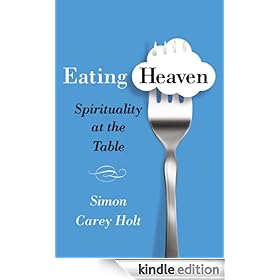
Response: Eating Heaven


I may be biased, but my friend Simon wrote a terrific book last year, Eating Heaven. And I loved it. I read it very slowly and savoured every bite.

Each chapter focusses on one table: the kitchen table, the backyard table, the café table, the restaurant table, right up to the table of communion. And each chapter has stories, interviews, history and reflections on that table: eating with mum and dad in the kitchen, sharing a meal with marginalised men and women at a free lunch, having a coffee with a chef between shifts, and so on. Each chapter then ends with a recipe reflecting the type of eating that happens at that particular table.

The book is layered and rich, reflecting Simon’s background as trained chef, sociologist, theologian, and Baptist minister. It also reflects his love of Melbourne in the descriptions of laneway cafés and linen-topped restaurant tables; the juxtaposition of social inclusion and fancy pastries at one downtown church; and the transformative power of eating together in a multicultural city. Whether reminiscing over crowded kitchen tables or backyard barbecues, or savouring the perfect café latte or fancy restaurant dinner, Simon is always thoughtful. In a culture of empty food porn, his voice nourishes and refreshes. He not only enjoys the food, but also contemplates how poverty and wealth, hospitality and exclusiveness, celebration and mourning, and many other issues play out when we sit down at the table. His gentle questions and tentative suggestions are always thought-provoking.

More, they have an effect. Eating together is central to being human; and Eating Heaven reminds us of this gift. In my own household, reading it has triggered a couple of changes. For one, we have returned to a more intentional saying of grace. Despite trying various things over the years, grace had become a rushed magic formula that one or another kid would gabble as they reached for the serving spoon. It was worse than if we had not said it at all. But after reading this book, I have asked that we return to saying grace properly. Now we move between a candle and a responsive prayer; a minute’s silence before the meal; or held hands and a song depending on the mood – and we are loving this grateful pause at the end of the day, this moment of being together before we eat our dinner.

Eating Heaven has also recalled us to simple acts of hospitality, which we largely left behind in the maelstrom of having a third child. A few years on, we’re again able to make time for a coffee with friends, or invite others to eat with us in our home; and Eating Heaven has been a catalyst for thinking about why we eat together and how to do it well.

The stories, reflections and very good questions make this a book to savour, and slowly digest. Thank you, Simon.

Tuesday, May 20, 2014

Response: Life Drawing: a novel

Life Drawing

It is rare that one reads a soliloquy on a long term of relationship, but Life Drawing is just that. Gus (short for Augusta) and Owen have been together for a quarter of a century, and their relationship is coloured by grief, a betrayal, and their inability to have children.

The novel begins with the fact of Owen’s death, then goes back in time to tell the story which lead up to it. A new neighbour has moved in, disrupting their rural solitude, and the resulting relationships have deep ramifications. This structure gives the book the shape of a thriller, if a rather beautiful and sedate one. (And I predicted the ending less than halfway through: not very thrilling, perhaps.)

However, the plot is not the point of this book. What makes it special is the portrait of a long marriage, seen through the eyes of Gus. Intimacy and solitude are woven together; the partners negotiate with and allow for each other in a careful, thoughtful dance. Gus observes her husband and herself with an acute eye, moving between love and anger, guilt and frustration, affection and jealousy. At times she has the eye of a lover, at other times, a maternal eye. Their sex life ebbs and flows, from non-existent to raunchy; from passionate connection to ‘the sex that’s like the decent enough music you listen to because the drive is so long and it’s the only radio station you can pick up’. Like every marriage, they navigate difficult emotional terrain; they interpret each other’s behaviour; they talk and keep quiet; they makes mistakes and choose kindness; they eat lunch.

As well as the marriage, Gus’s relationships with their new neighbour, Alison; a former student, Laine; and her father and sister are charted with intelligence and restraint. So too are the long-term effects of betrayal, guilt and grief. These depictions felt very true: closely observed, honest, and wise, and it is for this that I recommend the book.

My only wish was that it had ended differently. The denouement felt unnecessary, pandering to the more sensational expectations of a television audience rather than hewing to the quiet wisdom of the rest of the book. It detracted from what was otherwise a very thoughtful meditation. I’d have loved to have read this book one page short of chapter 21, and had the preceding story shaped accordingly. However, in the final chapter, Gus posits different ways the story might have continued. This reader, then, suggests reading this otherwise moving novel, but deciding on one’s own, preferred, outcome. I’d go with the last paragraph of the novel, perhaps.

Wednesday, February 19, 2014

Response: Kith: The riddle of the childscape

Kith: The Riddle of the Childscape

When was the last time you encountered the word ‘tatterdemalion’? I have just read one of the most playful, exuberant, relishing encounters with language that I have ever come across: Kith: The Riddle of the Childscape, by Jay Griffiths. The author loves language and odd words; she plays with meanings and roots and etymologies; she relishes alliteration and other musical tricks; and the cadence of her writing is positively lyrical. Or, as she writes (in relation to the metaphors we have for feeling and knowing, but which equally pertains to her modes of expression), ‘Language…, a beautiful partisan, waits with rifle and song to ambush us into remembering what we used to know as children.’

Yes, the writing is beautiful, drawing the reader in; but the point of the book is not language. Instead, in the course of writing her last book, Wild, Griffiths visited many indigenous tribes and found herself wondering why the indigenous kids she observed were so cheerfully grounded, while the Western kids she knew were so unhappy by comparison. Kith is her attempt to answer that question.

Her answer is long, opinionated, and unabashedly Romantic. In brief, she argues that kids in the West rarely get what they really need: secure early attachment followed by extreme freedom; a relationship with the woods and the wild, including wildlife; a big tribe of kids and adults; stories packed with metaphor which allow for the expression of a child’s emerging sense of self; lots of free time; rites of passage into adulthood; freedom from consumerism; a rich, responsive education; and so on.

Instead, what they get is ‘controlled’ crying and the physical isolation of cots, prams and car seats, followed by helicopter parenting and little nuclear families; constant surveillance; highly structured schedules; media outlets and politicians which portray them in a constantly negative light; stop and search laws, curfews and dispersal orders for the crime of being young; lives trapped indoors; hollow stories; no rites of passage; and industrial-style, heavily politicised education.

None of these observations are particularly original. In recent years, Skenazy encouraged parents to let their kids be more independent; Louv urged kids into the great outdoors; Hodgkinson called for tribes and freedom and faerie stories; Robinson advocated for an education which drew out the unique gifts of each child; and many, many writers begged us chilly Westerners to be more physically affectionate with our babies and toddlers. It’s obvious stuff.

What sets Griffiths’ book apart is the way she brings these themes together under the umbrella of Romanticism. She compares the childhood experiences of Romantic poets – Wordsworth, Blake, Clare, Whitman – with indigenous practices of childcare, arguing that they have much in common; and goes on to suggest that these approaches will lead to happier children. Further, she argues, we lack (but need) a Western philosophical framework to describe our parenting practices; Romanticism fits the bill.

I love her writing; I agree with many of her observations regarding how kids could be better raised; and I find many of her arguments regarding Romantic and indigenous ways of raising children reasonable. However, this book is so passionately one-eyed, and so flawed, that Griffiths fails to convince overall – and this is a pity.

To begin with, despite identifying what Western kids lack – such as secure attachment, a big tribe, and rites of passage – Griffiths offers few practical suggestions as how to get these things into kids’ lives. How do we make parenting easier so that parents have the emotional capacity to forge deep strong attachments to their children? How do we balance the needs of parents with the needs of children? How do we widen people’s perceptions of their role in the lives of other people’s kids, so that parents aren’t required to fulfil all the adult roles in a child’s life? In a post-church society, who develops and conducts rites of passage? And so on. These questions are all raised by the text; yet Griffiths offers no solutions, and it is simply not helpful to identify what is needed (and indeed to criticise harshly how we parents, of which Griffiths does not appear to be one, do it wrong), but to offer no suggestions for change. It is left to the reader to imagine what could be and then put it into place – and yet many of the necessary structures are almost impossible to tackle family by family: they require cultural change.

For example, to take the example of a tribe, it took nine years of talking and parenting before we found a family who was genuinely interested in and able to live in the same street as us, and, more than that, willing to get involved in our kids’ lives in ways that eased the pressure on our child-parent relationship. Griffiths writes rather breathlessly that, in one tribe, parents never discipline their own children; that is left to others so that the affection of the parent-child relationship is never damaged. That sounds bloody wonderful, but it would require a seismic shift in how we as a society take responsibility for other people’s children for it to be even remotely possible here.

Another weakness of the book is how Griffiths glosses over the hardships of life for indigenous children. Sure, traditional ways of childhood sound great for those who survive, especially boys: roaming, hunting, fishing, and untold freedom for kids. But traditional ways also involve high infant mortality, infanticide when the rains don’t come or too many girls have been born, the ‘betrayal’ (as it’s described in the book by a young victim) of female genital mutilation, the sexual trade of young girls to forge connections or strengthen associations between tribes, social controls which require high levels of conformity, even child sacrifice for religious purposes. In over 350 pages of praising indigenous childcare practices and criticising ours, Giffiths devotes a scant couple of pages to listing some of the downsides of being an indigenous kid, and offers no explanation or justification for these less than happy practices. This is deeply unsatisfactory, and feels unfair. At least kids in the West get to live when the rains don’t come; most Western girls don’t have their genitals hacked off with rusty razor blades; and the sexual trade in young girls is looked upon as an aberration and a crime. For these aspects of the Western approach to childhood, I am grateful.

Because I have never lived with an indigenous tribe, I find it hard to judge the veracity of Griffiths’ account of indigenous lives. Even so, I found myself questioning it. For example, in one place Griffiths writes that after spending an afternoon with over a hundred indigenous kids, she realised that she hadn’t once heard a kid cry, and that she couldn’t imagine the same situation with Western kids. Having just spent three weeks of the school holidays with two different tribes of kids, aged between 6 months and 15 years, I can vouch that even Western kids rarely cry when they’re running around in a pack. They get busy, and work things out; and so I’m not convinced that this lack of crying is a unique feature of indigenous life.

To the contrary, in fact. One of my friends lived for two years in an indigenous village in Papua New Guinea. When she returned, she told me that one thing she will always remember is the crying. It formed the constant soundscape; she said she could not remember a time when she couldn’t hear a child crying, and that coming back to Australia was a great relief from this point of view. Was this village, eight hours’ travel by small boat from Rabaul, ‘less indigenous’ than the people visited by Griffiths? Or, in her visits with indigenous people, did Griffiths excise weeping children from her experience and hear only what she wanted to hear? I have no way of knowing, but I am sceptical that the lives of indigenous children following traditional ways of life are always so blissful. (As for the lives of indigenous kids whose traditional ways of life are being torn to shreds, that is, most of them, I weep.)

This blanket enthusiasm for indigenous practices coupled with a blanket criticism of Western practices grates; and it also leads to ridiculous inconsistencies. Griffiths is scathing of the way Western children are penned up indoors, locked away from the wild spaces that they need for their development. Yet in a chapter devoted to the importance of imagination and metaphor, Griffiths writes positively about the Kogi people in Colombia, who identify a boy as a future spiritual leader. This infant is taken from his mother, and shut in a dim cave for the first nine years of his life; his only exposure to the wider world is through the stories told to him. After nine years, he emerges as a spiritual leader (or, I suspect, completely mad). Of this practice, Griffiths admits only that some Westerners may feel ‘ambivalence’. Horror is more like it. One is left with the impression that it’s not okay for Western kids to be inside playing the piano, learning to cook, reading faerie stories, building cubbies, or playing hide-and-seek; but an indigenous kid can be locked away in a dark cave for nine years. Oh, please! Clearly, this is absurd; yet Griffiths seems cheerfully oblivious to both the brutality of some indigenous practices and the inconsistencies within her text which lead her to condemn in the West that which she extols in other cultures.

Griffiths also suffers from the hopeless sentimentality towards children that one sees in non-parents from time to time. As a parent, I do find it helpful to be reminded to let my kids take risks, to get them outside, to let them have their privacy and secret spaces and special dens. I like being a little breathless about the idea of childhood, and I know that when we relax our family culture, everyone is happier and more cheerful. But I also know just how much of childhood is about shit and sex and fighting and greed and fear, not only in my own children or the children I spend time with, but in my memories of childhood; and it seems that there is little room in Griffiths’ worldview for such normal kids. Not all kids are large-spirited hearty adventurers or passionate artists. Griffiths seems to be unaware of the variations in personality which are found, I suspect, across all cultural styles.

Her one-eyed view also means that Griffiths fails to see the opportunities for wildness and secret places that city children find: on the subway, up the fire stairs, under the stoop, in a cubby, or in the branches of a tree at the local park. Not every wild space or secret den needs to be a rural idyll. She seems to miss the ways city kids lose and construct themselves, and make little nets of privacy, not just in folk tales but in music and dance and sport, and dreaming in the back seat of the car. Her unabashed primitivism lacks subtlety; and there is so much good about being a Western kid that I find it hard to perceive the crisis of childhood to which she constantly alludes.

So I have lots of issues with the book; still, I recommend it. Griffiths’ observations about what makes kids thrive are good sense, overall; and the great exuberant eloquence of her writing is such a delight, such a gift, that I am prepared to forgive very many of the flaws. Cat-shadows in beetroot patches will win me over, every time.

‘Obedience is deadly, will is divine and the vital wildness of the human spirit is purring, over there, like a cat-shadow in the beetroot patch.’

***

PS: If you’re not really up for a long, loquacious, one-eyed, deeply flawed rant – though why not, I can’t imagine! – but you still want to think about how to parent generously, I’d recommend Hodgkinson’s utilitarian The Idle Parent. My longer response to it is here, but, in short, it advocates freedom and choice; is packed with suggestions for ways to maximise love and affection and minimise the rage and frustration of parenting; and urges parents to seek ways of making family life fun. It’s intelligent, enjoyable, good-humoured and opinionated, and lacks only cat-shadows and beetroot patches. And who has a beetroot patch, anyway? The Idle Parent: Why Less Means More When Raising Kids

Wednesday, October 16, 2013

Response: Mr g

Mr g: A Novel About the Creation

The creation wars. If you believe the newspapers – and some execrable American school boards – Christians believe that God is ‘up there’ somewhere tinkering away with the creation (one imagines some bearded whitefella fooling around with mud); and physicists believe that it all started with the Big Bang. Never, apparently, shall the twain speak except abusively, and without respect or understanding.

Me, I’m a Christian; I relate to the universe and my place in it through the lens of the Christian story. I also accept the Big Bang as the best scientific explanation of how the universe came to be, and evolution as the best explanation for how life began and takes the form it is now. I don’t see this as a contradiction, because I have faith in something bigger than can be encompassed by one religious framework, or one set of faith stories; any religion can offer only a partial glimpse. It is arrogant to the point of hubris to suggest that any human being or religious system has full knowledge, or can begin to fathom the size and extent of the universe, let alone the vastness and nature of what I, in my religion, call God.

And that is why I paradoxically loved the attempt of one human being to communicate the size and extent of the universe, and the vastness and nature of God. Mr g, by Alan Lightman, is a novel about the creation. After countless aeons wandering around the Void with Aunt Penelope and Uncle Deva, Mr g becomes a little bored. He is tired of nothingness; he feels like it is time for something. And so, in a playful mood, he dreams up Space. Out of this whim spin countless universes; and with Space, comes Time. Mr g and his relatives explore these new and interesting dimensions, until Mr g decides even more is needed. Therefore, in one universe, he invents matter – and then sits back and watches what happens.

As well as being an author, Lightman is a theoretical physicist, and the story of creation is beautifully described: the Big Bang, the expansion of matter, the development and collapse of stars, the slow movement of atoms into planets and solar systems, and, to Mr g’s surprise, the gradual development of animate matter out of inanimate particles. Even more surprising is the arrival of three new presences in the Void, particularly Belhor, a conversational sparring partner for Mr g.

These developments provoke many conversations in the Void. Will the animate matter have a soul? Will it experience suffering? What is the role of Mr g: to intervene, or to stay away from the creation? Animate matter longs for eternal life; can Mr g grant this? The conversations bring out different religious assumptions: Uncle Deva represents the Eastern; Aunt Penelope, the Greco-Roman; and Mr g, the Abrahamic faiths. Through all, Belhor plays Devil’s Advocate, arguing, for example, for the necessity of evil and ugliness now that goodness and beauty have come into being.

These thoughtful conversations are never turgid or heavy; rather they are brief exchanges interrupted by somersaulting demons and Mr g’s need for a long meditative walk to think things through – but they cut straight to the heart of the big questions. And just as the Christian scriptures tell stories of God evolving in response to human need, the eternal Mr g finds that he too is being affected, even changed, by his own creation.

Lightman is a beautiful and lucid writer, playful and evocative, and manages in this novel to convey, to some extent, the unimaginable vastness of Space and Time. If you are a rigid, conservative Christian, there is no question that you will find this book and the representation of God highly offensive, even blasphemous; you have been warned. But if you have a bigger idea of God, or if you are open to the idea of a curious, thoughtful, experimental supreme being, then you too might fall in love with this wonderful novel, and the way it allows scientific and religious stories of creation to lie not in opposition, but nested gently into each other, right where they belong.

Tuesday, April 30, 2013

Response: Little Bee

Little Bee

I don't know about you, but I am tired. I am tired of our government locking up men, women and children in immigration detention here and abroad; I am tired of our customs and naval services being implicated in the drownings at sea of desperate people who have risked death in a leaky boat over certain torture in their own countries; I am tired of having bits of our country excised into special zones no longer eligible for asylum claims; I am tired of members of our government calling people who make legal claims to asylum 'illegal' even as the government itself continues to break international laws and treaties to which it is a signatory; I am tired of hearing people who should know better telling me that asylum seekers are criminals in their own countries, and that they throw their children overboard; and I am tired of reading about it all. I have written letters and signed petitions and volunteered at charities which provide services for asylum seekers; I have written about media portrayals of asylum seekers in the newspaper; I have preached on the ancient prophetic call to care for the refugee; I support family and friends as they study and work with asylum seekers and refugees; I spend time each week with refugee children myself; I pray – and I am so tired.

I have been ground down. I still care, but I feel hopeless. And hopelessness leads to despair, and despair leads to passivity – and that's not a good place to be.

But last week, I read Little Bee. It is the story of two women: Little Bee herself, the teenage survivor of genocide who has fled to England seeking asylum; and Sarah, the Englishwoman Little Bee met on a beach in Nigeria and whom she has come to find. The novel alternates between their voices as their lives become intertwined; and it is the saddest, funniest, most compulsively readable story I have read in a while.

Little Bee is luminous. She has been through the fire; she is deeply traumatised; and yet she has decided to seek beauty in the world's scars. Meanwhile, Sarah is also deeply traumatised by the events of their first meeting and what ensued; but her trauma has been largely blanketed over by the comforts of wealth. Their reunion cracks her mask, and allows Sarah to return from moral death back to life.

Sarah doesn't particularly want to make this journey. When they first met, she made a significant sacrifice for Little Bee, but she does her best not to think about it. As the editor of a fashion magazine, she wishes fashion and make up were enough for her; she would prefer her life to be pleasant and fun. Despite her efforts to be frivolous, however, her deeper moral compass continues to bind her to Little Bee in ways that make her life decidedly more difficult. The novel is both the telling of Little Bee's story, and the chart of Sarah's journey.

The book is very hard going in places, particularly when Little Bee recollects what happened to her village. Horrific events are recounted calmly, but are, of course, deeply distressing. What makes the book manageable is Little Bee's generosity of spirit, and a good dose of black humour. As a coping mechanism to deal with her very reasonable terror of what will happen when 'the men' come, Little Bee works out how to commit suicide in any setting; many of her plans are decidedly comic. For example, she is fixated on Queen Elizabeth II, and in one scene imagines how she will commit suicide at the Queen's garden party.

A further note of humour is provided by Batman, Sarah's four-year-old son, who lives in the costume of the caped crusader and will only answer to that name. Like any four-year-old, he erupts into the most serious moments with 'mine done a poo' and other tricks; and any parent will recognise Sarah's voice as she struggles through a devastating conversation spliced with instructions to her son not to spill cornflakes on the floor.

This humour, and the human side, give the book the voice of authenticity. The story isn't perfect, and the dialogue is somewhat hackneyed at times, but it is a great read. Little Bee's story could easily have become a treatise on the experiences of asylum seekers, both abroad and in Western detention centres; and while these stories must be told, they are easily ignored and don't make for bestsellers. Splicing the story in with conversations about cornflakes on the floor make it both more shocking, and more real, because it brings it home.

As mentioned above, there are several very distressing scenes; as I read in a café in the spare hour between writing with refugee kids and picking up my daughter from kindergarten, I wept over my café latte. It aligned me uncomfortably closely to Sarah, also fond of a coffee, also the mother of a four-year-old – and it was a good place to be taken.

One of the curses of privilege is that one can fall into the trap of thinking that one has somehow earned it, and that one has the right to protect it. One can also feel affronted when other, less privileged, people make one's life uncomfortable – such as when one feels tired, so tired, when one thinks of asylum seekers. Me, I'd prefer they didn't make me so uncomfortable. If they need to come, then of course they should, but it would be so much more pleasant if we could just welcome them and they could then assimilate and become invisible. I am fed up with being made to feel morally uncomfortable because I belong to a society which treats asylum seekers like sub-humans, and has normalised that attitude to such an extent that when I wrote about refugee children in the newspaper, I received letters from people saying it was the first time it had occurred to them that they were just people (!). But somehow my feelings of frustration have spread from government, elected officials and the media to asylum seekers as well. Such are the poisonous times in which we live.

However, Little Bee makes the story of seeking asylum personal; and Sarah brings it home to the comfortable suburbs. As a reader, I am reminded that as a person of privilege I don't have the moral option of feeling despair. I think I'm tired? I should go live in a detention centre somewhere and fill in a form every time I need a new sanitary pad; I should try to sleep when I am tormented by violent memories of what happened to my village and my loved ones; I should live in detention year in year out with no visa and no hope; and then I might know something about fatigue and despair. Or I could read Little Bee again, experience life through her eyes, and then recommend her story to you. Any novel which makes nice middle class women laugh out loud and then weep and lie awake at night, confronted by their own complacency – well, that can only be a good thing. Read it.

(If you've already enjoyed Little Bee, you may also like Wizard of the Crow.)

Wizard of the Crow

Friday, November 23, 2012

Response: The Idle Parent

The Idle Parent: Why Less Means More When Raising Kids

The kids and I were at the local pool, playing ring-a-rosy. I was having a ball pulling them underwater; judging from their giggles and shrieks, they were having a ball too. Behind us some older kids were fooling around, aged maybe nine, ten and eleven. Above us strode an anxious lined middle class mother, watching them like a hawk and shouting an instruction every few seconds. ‘Stop that! Leave him alone! Go left! Watch out! Be careful! Move to the right!’. On and on and on it went.

I felt myself cringing at her, and then at myself as I rebuked my six-year-old for launching herself into a group of toddlers. ‘For heaven’s sake,’ I wanted to shout – both at her and myself – , ‘leave them alone!’

How can kids enjoy themselves when their every move is noticed and critiqued? How can parents enjoy themselves when they are convinced that every move their kids make will result in disaster? And yet that is the tone of so much middle-class parenting, and so much parenting material. For the most part I avoid parenting books. Sanctimonious and puritanical things, I want nothing of them. But at right angles to the essay section of my local bookshop is the parenting shelf; and catching my eye the other week was The Idle Parent.

What a title! It sang out to me. I have three kids, aged nine, six and four, and I just can’t be bothered being a proper energetically hovering middle class parent like the woman at the pool. As all the other mums rush their kids off to karate / jazz ballet / Chinese / drawing / whatever, I certainly do feel idle; even so, I don’t have the energy or interest to do likewise. The thought of watching some six-year-old learn a dance move makes me want to scream with boredom; worse, standing over them as they leap about the local swimming pool makes me want to slit my throat. I want to fool around in the pool myself, or I want to read a book; either way, moderating their fun is not my idea of a good time. So I picked up The Idle Parent, and devoured it overnight.

The book’s thesis is simple: Leave them alone! We are not kids, and kids are not adults. Our interests only sometimes overlap. So, suggests the author, the simplest recipe for a healthy happy family life is to give your kids the freedom to do their thing while you go and do your thing. Be there when they need you, but don’t hover. Just let them be. His ideal parenting situation is a large field, many kids romping at one end and many parents drinking beer at the other. Everyone’s safe, and everyone’s happy!

Such a scenario brought a big smile to my face, because I have often thought that my ideal parenting situation is a house party, with twenty kids running around and twenty adults drinking wine and talking their heads off. My kids tend to agree, which is why they beg for such events. Who are you inviting over? they ask most Saturdays, There must be someone!

(For that matter, our other favourite parenting environment is a large field at a friend’s block, as long as we have a couple of extra kids with us. The kids run down the hill and over the next ridge, and we can talk, enjoy the view and inspect the new growth while they’re gone. Last time the horde came charging back up the hill, screeching and laughing themselves silly, dangling leeches from the ends of their fingers and waggling them about. It was hilarious.)

By now any non-parents must be rolling their eyes; do we really need a book to be told to leave the kids alone, even if it is to get sucked by leeches? But those among us with children know just how hard it is. Our culture highly values present and attentive parents, lest little Johnny have his fragile ego squashed because Mummy is more interested in a book than in him, or lest little Cindy have her hopes of being a professional ballerina dashed because Mummy couldn’t be bothered with dancing lessons. Even the author of one of the more interesting recent books about child raising, Last Child in the Woods, which is about the urgent need to get children back in touch with the natural world, admits that he never lets his sons out of sight when they’re hiking. (When I read that, I didn’t know whether to throw the book across the room, or cry.)

In that light, I am a wicked mummy. I have friends and interests that have nothing to do with my kids; I remind the kids about snakes then let them roam through field and forest; and so it is a great relief to read a book which backs up my more carefree approach.

Of course, Hodkingson doesn’t advocate absolute freedom. He has strong ideas about what is and is not helpful as kids explore the world. Television gets the thumbs down, as do plastic toys and having too much stuff; inside isn’t the best place; and neat clean tidy places aren’t ideal, either. He argues kids need space to roam, lots of access to trees, bushes and wild spaces, and things to make stuff with. Good books, wrestling on the floor, a bit of dirt and mess... it all sounds about right to me. The result of such an approach is resilient, creative, competent children (and parents) who are resistant to the lies of consumerism.

The book draws from a broad range of thinkers, from John Locke, Rousseau and DH Lawrence to AS Neill (Summerhill School); ideas from more recent authors, including Skenazy (Free Range Kids) and Louv also surface. The synthesis is cheerful, intelligent and convincing. Above all, I appreciate that it is not just about kids (and therefore about what parents should do (and fail to do) in raising them); instead, The Idle Parent is really about families. Hodgkinson asks good questions about what parents want from life, and encourages the reader to critique his or her own approach, and to recognise and critique the at times suffocating limitations of the dominant culture.

For example, he asks what is enough – do both parents need to work full time or could they both be home with kids more? Why do we live where we do: could we live elsewhere and pay less rent or mortgage? Could we live in a smaller house closer to work and spend less time commuting? What do we spend our money on, and why – do kids really need or want manicured houses, expensive holidays, amusement parks and fancy toys, or are they consumerist furphies? What do we enjoy doing as a family, and what do we hate doing together? Do we enjoy holidaying together, or are there times when separate vacations would be more restorative? Do we need more adults around to contribute to family life, and if so, who can we call on: friends, family, paid employees? In short, he questions how we adults constrain our lives (particularly with regards to happiness) and how we might liberate ourselves, using a refreshingly utilitarian approach.

It’s a lovely book and terrifically opinionated. It opens with a manifesto ‘We pledge to leave our children alone / We reject the rampant consumerism that invades our children’s lives from the moment they are born / We drink alcohol without guilt / We reject the inner Puritan...’, and follows with chapters including ‘Seek not Perfection’, ‘The Myth of Toys’, ‘Down with School’, and ‘Let Us Sleep’, familiar territory for most parents. Best of all, he offers no one-size-fits-all solution, but encourages each family to find what works – or, in the words of the Manifesto, ‘There are many paths’. Hodgkinson has strong opinions about what doesn’t work – long hours at work, large mortgages, too many toys and bits of plastic, guilt – and many suggestions about what could.

I happened to go on a family holiday right after reading the book. I was going to spend the first week largely alone with my girls in a beach house twenty minutes’ walk from town, with no car. It had the potential to be fantastic, which is why I had organised it so; but it also had the potential to collapse into nightmare. I’m not overly fond of the beach. I’ve had little kids for so long that it feels like I spend my whole time hovering there. I don’t get to sit, and I don’t get to swim; and I don’t like building sand castles or helping anyone else do so, either. But this time, I was determined it would be different. The kids are a bit older, the beach was on a shallow bay, and I was going to be Idle. The holiday wasn’t going to be just for my kids – I was going to have a holiday too.

Day One. Resolve and book firmly in hand I sat in the sand, ignored my girls, and read while they built sandcastles and splashed in the shallows. Nobody drowned. I was so relaxed that after fifty pages I shut my book and went and dreamily dug a moat out of pleasure, not duty. My girls were delighted. We went home for lunch, then I taught them how to do the dishes, explaining that I would do the cooking and the dinner dishes and this was a fair division of labour. When they kicked up, I pointed out I would take them back to the beach after the dishes were done, then walked out. I lay on my bed and read my novel; and after a while I heard the sounds of them washing, drying and putting things away. I also heard them make up a dishes song that lasted them through every batch of dishes for the entire two week holiday. And then I heard them each find a book and a quiet corner and read too, for an hour. Bliss.

So each day went. They did stuff they wanted to do; they did a bit of housework; I did stuff I wanted to do; I did a bit of housework; and sometimes we overlapped. I didn’t shout at them or watch over them closely; and because I was reading and dozing and feeling relaxed, when I did spend time with them it wasn’t a duty but a pleasure – and so it was fun.

And this, I think, is Hodgkinson’s point. We are born free, and everywhere we are in chains. Parenting is a prime example of this; it sometimes feels impossible to have a conversation about parenting without whinging or listening to others whinge. But Hodgkinson reminds us that we in the Western world are free. We choose to partner and we choose to have children; we choose where we live and how we work; and so on. As free adults we should take responsibility for our choices, stop whining about them, and start finding ways to enjoy ourselves while we and the kids co-exist. And if we do so, we will all find ourselves having a lot more fun.

With his words (‘I am free! We are all free! I am being Idle!!’) ringing in my ears I found many ways to enjoy myself that holiday. I read a dozen books, and we all caught up on a heap of Japanese anime. My legs lost their ghostly winter pallor. The kids learned French cricket and how to dig for crabs, catch, cook and eat a fish, and wash the dishes afterwards. There was very little yelling by anyone. I came home renewed and ready to step even further back as a parent. It mostly works, and that’s good enough. Oh idle me!

Free Range Kids: How to Raise Safe, Self-Reliant Children (Without Going Nuts with Worry) Last Child in the Woods: Saving Our Childern from Nature-deficit Disorder Summerhill School

Wednesday, August 15, 2012

Response: Stuart Brown's Play

Play: How It Shapes the Brain, Opens the Imagination, and Invigorates the Soul

I have long noticed that when I am flat I become obsessed by Getting Things Done. The dishes, the floors and the dinners become important and difficult and time consuming and I find it hard to enjoy my children or anything else. The old adage suggests that all work and no play makes Jack a dull boy, and a lack of play certainly makes me very dull indeed – but work and play are not, I find, in opposition. When I regularly engage in play, I work better and life goes rather more swimmingly. The jobs get done quickly, my kids are delightful, and I find the time to play even more. I recently read a book which, rather gratifyingly, supports my observations: Stuart Brown’s Play: How It Shapes the Brain, Opens the Imagination, and Invigorates the Soul suggests that the opposite of play is not work, but depression.

The triggers for depression, of course, are another thing. Our society’s frenzied and selfish pursuit of financial success and personal happiness is a major trigger; so are the self-help books which encourage these twin and very tedious foci, and Play toes the party line. According to the blurb, ‘our ability to play through life is the single most important factor in determining our success and happiness’, which suggests to me that Play is designed to be picked up at the airport and read on the plane by middle management. As a result, many claims in the book are justified by the suggestion that they might increase one’s marketability, profit margin and, of course, happiness – whatever that is.

It would irritate me more but for my many crappy experiences of work which suggest that middle management has much to learn about how to set up interesting, rewarding and effective workplaces, and if Play will help them with that task, then it has my blessing. In any case, being pitched at middle management makes it a quick and easy read. Meanwhile, those of us not in middle management who are willing to overlook the success-and-happiness formula (and a few gross generalisations, such as which are playful thus creative countries) will find many interesting and salutary points.

Brown has studied play for many decades, and this book outlines his understanding of the nature of play, its necessity to human health and development, and the benefits of a playful approach to the whole of one’s life. An activity not just for children, Brown defines play as a state of mind: ‘an absorbing, apparently purposeless activity that provides enjoyment and a suspension of self-consciousness and sense of time’. Thus it might range from filling in the cryptic crossword to kicking a ball to going for an aimless wander. Play is vital because it is in this unconscious absorption we tune into the world and are freed from our limitations; and it provides an outlet for our deepest most creative selves.

As a result, Brown claims that people who play are more creative, energetic and insightful; they are better at solving problems and negotiating difficulties and conflicts; and they continue to grow intellectually and emotionally.

Of course this is good for the workplace, but it is also good for everything else, and Brown writes convincingly about the importance of play in child development, parenting, marriage and old age, as well as in education and vocational discernment. When so many of us are bogged down in the rat race, it is helpful to be reminded just how invigorating it can be to step out of the rut and play with one’s kids, one’s spouse, one’s friends, one’s neighbours, or even, shock horror, alone.

Brown does not specifically mention meditation, but as I read I found myself reflecting on the relationship between it and play. They are, to me, two sides of a coin, as good play, particularly solitary play, often precipitates in me a meditative stance. For example, letting the busy part of my mind wander through the cryptic crossword can provide the space for deeper insights than simple anagrams.

Much of what Brown says is common sense: of course your marriage is more interesting if you have a playful approach to it; of course playful people are better at solving problems. But sometimes common sense is not so obvious, and our natural desire to play is often suffocated by societal pressures to act ‘grown up’, as if being adult requires that one become stultifyingly dull. Therefore, despite my reservations about the success/happiness paradigm and my dislike of a few generalisations, I recommend Play to you, along with a good game of Scrabble, an evening of parlour games, or a thrilling round of hide and seek.

Parlour Games for Modern Families

Thursday, May 24, 2012

Response: The 100-Mile Diet

The 100-mile Diet: A Year of Local Eating

Very belatedly for one who is interested in local food, I have finally picked up The 100-Mile Diet: A Year of Local Eating by Alisa Smith and JB McKinnon (published in the US under the title, Plenty). I admit I avoided it for a long time. I had already read a book on similar themes, Animal, Vegetable, Miracle: Our Year of Seasonal Eating by Barbara Kingsolver; the thought of a whole book about what a couple ate for a year seemed too boring for words; and anyway, I know the theory of why we should eat locally and didn't see the need to be told all over again. Of course, my assumptions were completely wrong; this is a fine book. Richer than a food diary and more engaging than a polemic – and much funnier than Kingsolver – here is an intimate portrait of a Vancouver couple. The story is structured around the year they ate only food grown within 100 miles of their home, but it is much more than a story about dinner.

The book certainly has aspects of a food log, telling where and how they found local produce. They write nicely of the satisfaction of a successful run to the farmer's market, or finding an unexpected farm gate. They learn the intricacies of honey and squash; gorge on blueberries; pick strawberries; meet local fishermen; and learn how to cook, preserve and eat all sorts of new things.

It is also a fascinating history of a local area, charting the shifts in agriculture over the last few centuries. From an abundant food region for the Salish and other coastal tribes, to a self-sufficient colony feeding itself and exporting crops, to an area which imports most of its food while shipping out monocrops, the use of the land has changed dramatically. In that time, the stocks of wild foods, particularly fish, have also plummeted, so that an area which was once unimaginably abundant with seafood now enforces fishing controls to try and preserve what is left. Most sad are the devastating effects industrial accidents have had on the area; during their year of eating locally, half a million river fish were killed by a caustic soda spill. In the face of such devastation, however, the authors refuse to despair; instead, they choose to live responsibly and orient themselves towards hope.

These stories of shopping, eating and growing are interesting. Even more engaging, however, is Alisa's story. Alisa and James wrote alternate chapters, interweaving their views into one story. James's chapters are more finessed, but Alisa's are more personal; and I found her writing moving. She has suffered from cyclical depression since childhood, and although she doesn't dwell on the depression, it certainly has an impact on their year. She writes of what is, to me, a very familiar way of life, that is, living with one eye always on the alternatives, obsessing about real estate, other places, other houses, other lives, and that which might have been. The key to the book, and what is for me the key to local eating, is found in the pages where Alisa argues that eating locally has helped ground her into her particular existence, her particular time and place, in a way that is deeply and psychically healing; so much so that once the year was up, she (and they) decided to maintain, in large part, the diet.

I resonate very deeply with this part of the story, recognising myself in her description of living with one eye always fixed on the alternatives. I don't really know why I feel this way. It may be the curse of colonialism: I am the descendant of colonists; I live two thousand miles from the city of my grandparents; I have no long family history which links me to this place. It may be the curse of third culture kids: I lived in a couple different countries as a child, and all and none of them feel like home. It may just be a pervasive sense of saudade.

Whatever it is, I find this rootlessness and its corresponding restlessness corrosive. It's exhausting; I long for somewhere to relax and belong. I look at other cities, other houses, other lives, with the illusion that somewhere I may find my rest; but deep down I know that the answer does not lie elsewhere. Wherever I live, I will soon feel the same way.

Instead, what matters is that I work towards making whichever place I am in home. This takes learning: learning the seasons, learning the weather patterns, learning the annual changes of particular trees and the visits of particular birds. It's noticing small things: our May visitor, the thrush, which turns up for a week or two every year; the almond, which always blossoms in July.

And a crucial aspect of this project of rooting myself to this place is to learn the food – the people who grow it, the places it is grown, the seasons when it is ripe. Food is so primal, and so intimately linked to the land and our bodies, that it has the potential to locate us firmly in the present.

My family is by no means fully committed to local eating. By the time we factor in our family's multiple food allergies, intolerances and ethical choices, we'd just about starve eating solely local foods; and anyway, I'm not cooking potatoes for breakfast. However, over the last few years, as I have made an effort to source and feed my family with as much local food as reasonably manageable, I have found myself feeling correspondingly more grounded. The delight I take in knowing that in Koo Wee Rup, asparagus is growing its way towards spring; that fresh potatoes from Gembrook have skins so thin they are translucent; that Brunswick honey is at the base of my lip gloss is profound, more than just pleasure: it's the deep slow rooting of my life to the here and now.

The authors of The 100-Mile Diet, with their insights into place and belonging, clearly articulate what I have been fumbling towards on the other side of the world. They do this in between simple recipes for often overlooked foods; hilarious stories of separating grain from mouse poop with a credit card; and rollcalls of species and varieties that are now but a memory: the fish, the wheat, the potatoes, the apples that once stocked the region around Vancouver.

It is an engaging book, clear and well written, gentle and self-mocking even as it is inspiring. We might not all be freelance writers with the time to cook every meal, even breakfast, for a year; but in telling their story, the authors encourage us to think about how we might reconnect with our own locality and give us reasons beyond ethics. In short, in their view and mine, eating local food feeds more than the stomach: it is deeply grounding nourishment for the soul.

'We felt like pioneers setting foot on a strange place called home.' (James, on eating an indigenous camas bulb for the first time).

Animal, Vegetable, Miracle: Our Year of Seasonal Eating

Friday, February 17, 2012

Riding the Bus with my Sister

Riding the Bus with My Sister

Just up the street from me live some 80 people in supported accommodation. Their problems range from intellectual disabilities to schizophrenia to frontal lobe damage caused by stroke or other injuries. Some of these neighbours are easy to get along with; we lean against our garden wall and chat about the weather or the footy. Some are just familiar-looking strangers we pass by on the street. And several are more difficult: paranoid, verbally abusive, erratic and even, at times, physically threatening.

Each person is, of course, an individual, and their problems are only one facet of their personality; but there are certainly times when I lack patience with some of them: those who chat one day and treat me as a stranger the next; those who scream abuse; those who shout and sing just in front of our house when I'm trying to settle a baby.

Meanwhile one of the crossing ladies at school is well and truly on the autism scale, and to my shame there are days I find it difficult to greet her cheerfully yet again as she obsessively calls out everyone's name, holds the same short conversation as yesterday and the day before and every day for three years before that, and refuses to believe that a young child could be terrified as she shoves her large face into the pram.

So it was with great interest that I read Riding the Bus with My Sister, by Rachel Simon. Simon's sister Beth has mental retardation (Simon's phrase). Beth is able to live by herself in a form of supported accommodation, but she does not, and possibly cannot, work. Instead, she spends her days riding buses. Every morning, she rises early and heads to one bus stop or another, then criss-crosses town meeting up with her favourite drivers. On the bus she sits in 'her' seat, cattycorner to the driver, plays music on her portable radio, and makes loud observations about life, the bus drivers, fellow passengers and whatever else excites her attention. One year, Beth exacted a promise from Simon to spend twelve months riding the buses with her whenever possible, and the book is the result of that year.

Simon uses the book to tell several stories. The first is, of course, the story of riding the buses with Beth, who is spirited, belligerent, defensive, large, loud, opinionated, bossy and unforgiving. Simon charts a year of early starts and sisterly conflict; bus drivers and health professionals; and mad dashes to public bathrooms at timing points. Some of the bus drivers are particularly charming. Among their ranks are story tellers, philosophers and comedians, and their hospitality towards Beth far exceeds their duty as drivers; these stories alone are worth the read.

The book also documents the relationship between the sisters. Before the year, Simon and Beth lived in different cities and had grown apart. Simon writes quite honestly of her discomfort with Beth's issues, both historical (having the sister in the 'slow' class at school) and current. Beth sounds exasperating, and Simon struggles through the year to come to terms with who Beth is now, rather than with who she wishes Beth might be. She investigates how much of Beth's personality may be an expression of her disability, and gains some new insights into why her sister is the way she is. Despite her ongoing ambiguous feelings about some aspects of Beth's personality, Simon documents a growing respect for her resourcefulness and a much gentler love for her.

Her year with Beth was also an opportunity for Simon to reflect on her own emotional state. Her significant relationship had fallen to pieces; she was working insanely long hours and was deeply lonely. Slowing down and spending time with Beth, as well as the more philosophical, pastoral or compassionate bus drivers, helped her reflect on what she had prioritised in life, and enabled her to make some different choices.

The final part of the story is their shared history, told in flashbacks through the book. Their parents split up, and their mother fell into a pattern of abusive relationships which ended in the abrupt abandonment of her children.

Simon's slight tendency to make everything neat is more than compensated for by the dynamic people in this book: Beth, her long term boyfriend Jessie, the bus drivers, even Simon herself. It is a pleasure to read. But what makes Riding the Bus really valuable are the questions it raises. What is it like to have a sister who is largely oblivious to one's own needs and the needs of others? How do you talk with someone like this? Who is responsible to care for such a person, and what supports need to be in place? What are the emotional and relational costs of caring for such a child? How liberating is self determination if the person making decisions is constantly self-destructive? What are the ethics of sterilisation when someone is sexually active and loves small children, yet is incapable of caring for a baby? How can someone express hospitality through their work, and what are the limits? Over the course of the book, Simon grapples with these and other difficult questions from a very personal vantage point.

It's a book which makes me think carefully about how I treat my neighbours, my crossing lady, or anyone else with a mental illness or disability. There are certainly times when I want to shun one or another because, quite frankly, they are a pain in the butt. Other times I am tired and grumpy and lack the patience to have yet another boring conversation about the weather. Riding the Bus with My Sister is a great gift because it reminds me to slow down, and have patience.

It shows how one such person is a dynamic whole person, embedded in a community, and reminds the reader of the obvious but easily forgotten point that people with mental disabilities have families, histories, stories, secrets and desires, just like everyone else; and, like everyone else, they come bearing gifts. Whether or not we take the time to recognise and receive those gifts is up to us.

Thursday, December 29, 2011

Battle Hymn of the Tiger Mother

Battle Hymn of the Tiger Mother

Many of you have, no doubt, read the extract from Battle Hymn of the Tiger Mother that made so many people so hot under the collar. In it, Chua detailed what appeared to be her absolutely brutal methods for driving her children to technical excellence in school and music. Like so much we read in the newspaper, the extract was designed to polarise and it did so perfectly. It created an absolute furore, a wealth of free publicity which led to mega sales of the book. I certainly found Chua's article appalling; however, I recently sat down and read her book, wherein I discovered a more complex story.

Battle Hymn opens with Chua's claim that she, and all good Chinese (read: strict immigrant) mothers, know how to raise their children properly. They are dominant and controlling, and commit themselves utterly to driving their children to excellence. Growing up, Chua's two daughters had no play dates, no sleepovers, no school camps, no television, and no extracurricular activities except music. Thus they had plenty of time to work hard, get perfect grades, and master an instrument. Satisfaction, claims Chua, is to be found in mastery of something, and mastery doesn't come easily. So her daughters practiced their musical instruments for more than an hour every day, and three to five hours if a performance was looming; and when they were unwilling to rehearse Chua stood over them screaming, threatening to destroy their soft toys and even withholding food and water until they had completed their practice.

This is pretty much where the article stopped and, of course, it was ghastly. We were left with the picture of a psychotic mother brutally dominating her children as they attempted to master the instruments of her choice. This is not an entirely inaccurate impression, but it omits the good humour, the self-deprecating tone, and the way Chua's methods fell to pieces with her second daughter, which are all detailed in the book.

Daughter one, Sophia, was willing to get with the program. She went along with the rules and the practice, and calmly excelled at everything. Lulu, however, was different. Lulu just said no. The battles grew more and more heated until, despite her natural gifts, years of accomplishment and a love of playing, Lulu flat out refused to pick up the violin. The book details how mother and daughter interacted and how Chua eventually admitted defeat, allowing Lulu, at thirteen, to make some of her own choices about how to spend her time. Lulu now sets much of her own agenda and, shock horror, wastes time playing tennis.

Chua relates her ambitions and her methods as well as her rages at Lulu and where she went wrong, and freely admits the things they missed when both of them obstinately refused to give way. The girls continued to practice when travelling with the family; and there were times when the whole family missed one thing or another because Lulu refused to practice and Chua refused to leave the hotel until the practice had been completed. At one level, this is crazy; at another, I have some sympathy for Chua – unlike so many of us with our children, at least she stood her ground.

Battle Hymn is more than a parenting story, however. It is also the classic immigrant tale. The daughter of migrants, Chua had limited opportunities and was determined to be successful in a measurable way. Now that she has made good, Chua is absolutely determined that her own children will have every opportunity made available to them. Utterly predictably, her oldest child has taken up the mantle and excels, while the second child has adapted to the dominant culture and rebels against the strict cultural mores of her mother.

The book is also about family and Chua writes simply and well about her parents and their shift from China to America; the illness and death of Florence, Chua's mother-in-law; and the terrible leukaemia of Katrin, Chua's sister.

Overall, the book is candid, moving and very funny, and Chua has a nice self-deprecating tone. She is an odd mix of extremely sharp and charmingly naive, brutal and fragile, and I found myself loving to loathe her.

On a more personal level, Chua's book raises serious questions for me as a parent. While I will never be the sort of mother who will stand over her children for hours of music practice or drive them all over creation to see particular teachers, I often wonder whether I don't demand enough from or for them. I'm not sure how to balance the needs of childhood – for play, daydreaming and exploration, which my kids excel at – with the fact that they don't seem to be learning as much as I would hope.

At home, my husband and I have focussed on relational demands: respect, obedience, graciousness and kindness; but I wonder if we should be demanding more intellectually. One of our daughters is constantly bored at school; the school fails to stretch her academically. A parent like Chua would be in there, devising curricula and making it happen, while I sit at home, fretting and naively trusting that the school will actually do what it promises. I don't want to compensate for the school's lack by filling my daughter's hours at home with academic challenges – surely that is what the hours at school are for – but I am afraid of her becoming lazy and stupid just through sheer lack of exercising her thinking muscles.

And yet, like most concerns I have for my children, these issues are really about me. Chua writes that letting most kids follow their passion leads to ten hours a day on Facebook as they lack the discipline to become really good at what they love; they need parents to provide the drive. In fact, she goes on, most people really suck at what they love because they are too lazy to practice enough to become good.

Her comment stings. I was bored out of my skull for most of my schooling and doodled around at home, and now I'm an adult who is often not quite sure what I'm doing or why. Were I slightly different or had I more drive, I would have written books or be working on a newspaper or doing something else professional rather than sweeping the floor, wiping snotty noses and making notes on a blog from time to time. In Chua's eyes, I am certainly an underachiever, but I don't know where her drive comes from or how to get it.

On the other hand, I'm not sure that people with great drive are always settled in themselves, or even kind. And there's the nub – what is success? Chua is very focused on measurable success: learning things quickly; being top of the class; earning the praise of well-regarded people; having a prestigious career at a famous institution. But the kind of success Chua dreams of often comes at great cost. Chua's daughters had a nanny (Mandarin speaking so that they would grow up bilingual, of course); and Chua details the many years that she and the girls lived in one city and her husband in another as their careers took them in different geographical directions. Meanwhile, Chua spent her girls' childhoods racing from work to school to home to music lessons and back to work again, desperate to fill every minute with useful activity, which is the sort of behaviour I associate with a certain emptiness in oneself. I can't imagine running on that sort of treadmill, or paying that sort of price, to gain the conventional markers of success. What is life if it is not about raising one's own infants, or spending evenings with one's own husband, or just sitting listening to the silence?

As for the hours her daughters spent practicing their instruments when others would be throwing snowballs or hanging out with their girlfriends – it's hard to know what really matters in this life. It might be rather thrilling to be a musical virtuoso; it might be rather satisfying to be sought after by prestigious institutions; but then again, I have had most of my life-giving experiences when I'm just doing nothing. Reading Chua's book raises the all-important question, what does it mean to live life to the fullest? Is it to cram every moment full of work and family, or is there more? Battle Hymn doesn't claim to answer these questions; in fact, it ends with these questions, and the answers, of course, differ from person to person and shift and change for an individual over time.

As for my parenting style, I can't dismiss Chua's methods all-out. I know far too many kids who seem to spend their lives in front of a screen, and have so little real attention paid to their gifts, interests and development that it is hard to imagine them growing into anything much other than consumers. There is merit in a strict, disciplined and intentional upbringing; and it is great for kids to become so good at something that they are brimming with a sense of accomplishment and pride.

Chua tells a story in which she tore up the birthday cards her daughters had made her. They had been slapped together in five minutes, and she rejected the lack of care they had put into the cards, demanding more from her daughters. The bloggerati was horrified, yet I think Chua was right. We constantly praise our kids for drivel, but it hardly encourages them to stretch out and discover what they are capable of; instead, it tells them that a lazy mediocrity is just fine. And perhaps such a mediocrity is enough in a society in which a major university has plastered billboards with slogans of 'Relax' and 'It's all good' – but it hardly encourages excellence.

As a parent myself of daughters who sometimes make beautiful things and other times churn out horrible slop, I found myself cheering Chua – and when the next piece of crap came my way, I gently raised an eyebrow. I asked whether it was really the best my kid could do, and talked about how presentation and effort communicate a great deal about love and care or lack thereof. I didn't yell and tear the piece up, but it disappeared and something decent took its place.

Chua's methods and goals are extreme; but if they give our parenting a nudge, so that we kindly and gently ask our children to do a little better, then we might just be surprised at what our kids are capable of; and our kids might have the privilege, too, of being delighted by their own strengths and abilities.

Tuesday, November 29, 2011

Advent List 2011

Preparations for Christmas are upon us. Sadly, most preparation rituals do not seem to have much to do with the coming of a bearded prophet who recalled to us the poor, the outcast, the refugee, the dispossessed, the imprisoned, the widow and the orphan. Instead, we are bombarded with tinny carols, silly plastic evergreen wreaths strung from the light poles as the Australian summer begins to sizzle, and exhortations to buy buy buy.

A couple of years ago, I wrote about developing some small non-commercial rituals for Christmas with my kids; and, as I am story crazy, they of course involved a pile of picture books. So then I put together a list of some of the books we will read during the four weeks leading up to Christmas; you can read the list here.

However, many of the books on the list are out of print and hard to get. Meanwhile, since then I have found lots more wonderful stories, so I have drawn up a new list, adding the new stories and letting go of some of the old.

These are not Santa stories. Nor are most of them explicitly Christmassy, let alone Christian. Instead, they are stories which honour and celebrate hope, joy, generosity, gratitude, sacrifice, community and love. In particular, several focus on welcoming the stranger into our midst, which has always been a central calling to both Jewish and Christian peoples and would seem particularly appropriate as some of us, at least, prepare to welcome in the form of a baby the most strange and wonderful human the world has ever seen – and a refugee, to boot.

***

In the Small, Small Night

So let’s start with that. Jane Kurtz has written a lovely book about immigrant children, In the Small, Small Night. Kofi and Abena have recently arrived in America, but Kofi is so worried that he will forget his family in Ghana that he cannot fall asleep. So his sister Abena, recalling the village storyteller so far away, recounts two traditional stories from home: Anansi and the pot of wisdom; and the turtle and the vulture. As Kofi listens to the stories, he is soothed back to sleep.

The story is told without a hint of mawkishness, yet it is very touching as these two young children, so far from home, talk about their fears and what they have left behind. What is just as moving is the way Abena has brought the gift of storytelling with her from Ghana. The wisdom contained in the stories will sustain them as they start at a new school, in a new culture, where everything is different.

The Arrival

Sean Tan’s The Arrival charts the journey of another immigrant. This book without words is for all ages, as the story is told through hundreds of eerie sepia-toned illustrations. The Arrival will raise all sorts of questions about why people flee and resettle, questions which may be extended to the Advent stories or to the refugees in our midst.

Nail Soup

Nail Soup is a retelling of a traditional folk tale which reminds us to welcome in the stranger. A traveller, denied all but the meanest of shelter and sustenance, convinces his host that he will make soup out of a nail. As the 'soup' bubbles away, the host is gradually persuaded to add ingredients that turn it into a generous meal they can share, demonstrating that a little hospitality leads to a rich bounty for all.

The Happy Prince: From the Fairy Tale by Oscar Wilde

Welcoming in the refugee and the traveller is all well and good, but we are also to care for the poor in our midst. In The Happy Prince, Jane Ray retells Oscar Wilde's tale in which the statue of a prince gives all it has – its ruby eyes, its gold leaf – to the city’s poor via an obliging swallow. Ray’s richly detailed illustrations add greatly to the story.

The Quiltmaker's Gift

The Quiltmaker's Gift is similarly themed, as a fabulously wealthy and utterly miserable king yearns for the one thing he cannot have: a patchwork quilt from the famed quiltmaker, who gives her quilts only to the poor. The quiltmaker tells the king that she will only make him a quilt once he has given everything away, and he gradually learns that joy is found not in material objects, but in self-sacrifice and caring for others. The detailed illustrations, which include dozens of quilt squares themed to the story, are absorbing.

The Mousehole Cat

Thinking of self-sacrifice recalls The Mousehole Cat, a tale from Cornwall. When winter storms close the harbour and bring a Cornish fishing village to the brink of starvation, Old Tom and his cat Mowser find a way out and brave the wind and the waves to catch fish for the town, knowing that there is a good chance that they will never return.

Amelia Ellicott's Garden

Old Tom reasons that there is nobody left to grieve for him; it frees him to risk his life to feed others. In Amelia Ellicott's Garden, a more passive older person feels abandoned by Time. Amelia struggles to maintain her beautiful garden and longingly remembers when she had people to share it with. It is not until a great windstorm blows her garden, her chickens and even Amelia over the fence that she discovers the host of neighbours – from all over the world – living in the flats next door who long to share the garden, and their lives, with her.

Rose Meets Mr.Wintergarten

Getting to know one’s neighbour, the first step to love, also features in Rose Meets Mr Wintergarten. In this lovely book by Bob Graham, a young girl moves into a new neighbourhood. When she loses her ball over the fence, her openness and her fairy cakes disarm the miserly neighbour who has terrified the area’s children for decades.

Wilfrid Gordon McDonald Partridge

Wilfrid Gordon McDonald Partridge is a good neighbour, too. He lives next door to an old people’s home and is particular friends with Miss Nancy Alison Delacourt Cooper, who has four names just like him. Miss Nancy has lost her memory, and Wilfrid Gordon sets out to find it for her.

Hop Little Hare

Margaret Wild’s Hop Little Hare is a simple story, also showing the love between the generations. It is not until Little Hare spies sheep nibbling at a curative boffle bush, which will ease his grandfather’s rheumatism, that he feels sufficiently motivated to hop!

Now One Foot, Now the Other

A more complex gift giving between young and old features in the classic, Now One Foot, Now the Other. Bob teaches his grandson to stack blocks, tell stories and walk. When Bob has a stroke, it is the little boy who patiently teaches his grandfather to stack blocks, tell stories and walk again, using the same loving words his grandfather once used with him.

Love You Forever

Love handed down between the generations is also found in Love You Forever, by Robert Munch, which he wrote in homage to his two children who were stillborn. In this story, a mother sings a special song to her son as he moves through the life stages; and as she ages and nears the end of her life, her son takes up the mantle and begins to sing it to his daughter.

A Child's Garden

Of course, we are called to love not just our family, our neighbour, the poor, the traveller, or the refugee; we are called to love our enemy, too. A Child's Garden tells of hope in oppressive circumstances. A boy tends a vine which throws out seeds on either side of a high barbed wire fence; the next season, vines grow on both sides of the fence and intertwine, symbolising hope for a future peace.

For All Creatures

The story of the vine recalls, too, that we are to love the earth and everything in it. For All Creatures uses gliding alliterative language to describe and celebrate all manner of things that creep and crawl, run and jump, slither and slide upon the earth. ‘For spirals, shells and slowness, smallness and shyness, and for scribbled silver secrets, we are thankful.’

Owl Moon

This celebration of the natural world is also seen in Owl Moon, in which a young girl goes out late one night with her father to see an owl. Owl Moon is a hauntingly beautiful children’s book, drenched in awe. An excellent book to read quietly at night, just before bedtime.

Belonging

In Jeannie Baker’s Belonging, like so many of her books, we are shown one way to be partners in the creation: and outside our very own back window! Like The Arrival, it is told entirely in pictures, making it a book that people of all abilities can pore over.

The Nativity

Let’s finish with two books about Christmas. The first is a lively rendition of The Nativity by Julie Vivas. Drawing from the gospel writer Luke’s account, she illustrates the story in her singular style: the angel Gabriel is a ragged punk and shares a cuppa with Mary; the naked newborn, hands outstretched, is still attached to the umbilical cord; shepherds loom, peering into the cot; and in the final scene, Mary pegs out nappies. In Vivas's interpretation, the Christmas story is not a far-off super-spiritual event, but something immediate, physical and real, that happens even now. I particularly love that Mary is enormously pregnant, pendulous breasts and all, and not a skinny medieval nymph.

Wombat Divine

Finally, what would an Australian Christmas be without a reading of Wombat Divine? Wombat desperately wants to be in the Christmas play, but he is too short, too clumsy, and too heavy for any of the parts. At last, Emu finds him the perfect role and Wombat is, quite simply, divine.

As are all these stories. Read, prepare, enjoy.
Related Posts Plugin for WordPress, Blogger...