Friday, November 23, 2012

Response: The Idle Parent

The Idle Parent: Why Less Means More When Raising Kids

The kids and I were at the local pool, playing ring-a-rosy. I was having a ball pulling them underwater; judging from their giggles and shrieks, they were having a ball too. Behind us some older kids were fooling around, aged maybe nine, ten and eleven. Above us strode an anxious lined middle class mother, watching them like a hawk and shouting an instruction every few seconds. ‘Stop that! Leave him alone! Go left! Watch out! Be careful! Move to the right!’. On and on and on it went.

I felt myself cringing at her, and then at myself as I rebuked my six-year-old for launching herself into a group of toddlers. ‘For heaven’s sake,’ I wanted to shout – both at her and myself – , ‘leave them alone!’

How can kids enjoy themselves when their every move is noticed and critiqued? How can parents enjoy themselves when they are convinced that every move their kids make will result in disaster? And yet that is the tone of so much middle-class parenting, and so much parenting material. For the most part I avoid parenting books. Sanctimonious and puritanical things, I want nothing of them. But at right angles to the essay section of my local bookshop is the parenting shelf; and catching my eye the other week was The Idle Parent.

What a title! It sang out to me. I have three kids, aged nine, six and four, and I just can’t be bothered being a proper energetically hovering middle class parent like the woman at the pool. As all the other mums rush their kids off to karate / jazz ballet / Chinese / drawing / whatever, I certainly do feel idle; even so, I don’t have the energy or interest to do likewise. The thought of watching some six-year-old learn a dance move makes me want to scream with boredom; worse, standing over them as they leap about the local swimming pool makes me want to slit my throat. I want to fool around in the pool myself, or I want to read a book; either way, moderating their fun is not my idea of a good time. So I picked up The Idle Parent, and devoured it overnight.

The book’s thesis is simple: Leave them alone! We are not kids, and kids are not adults. Our interests only sometimes overlap. So, suggests the author, the simplest recipe for a healthy happy family life is to give your kids the freedom to do their thing while you go and do your thing. Be there when they need you, but don’t hover. Just let them be. His ideal parenting situation is a large field, many kids romping at one end and many parents drinking beer at the other. Everyone’s safe, and everyone’s happy!

Such a scenario brought a big smile to my face, because I have often thought that my ideal parenting situation is a house party, with twenty kids running around and twenty adults drinking wine and talking their heads off. My kids tend to agree, which is why they beg for such events. Who are you inviting over? they ask most Saturdays, There must be someone!

(For that matter, our other favourite parenting environment is a large field at a friend’s block, as long as we have a couple of extra kids with us. The kids run down the hill and over the next ridge, and we can talk, enjoy the view and inspect the new growth while they’re gone. Last time the horde came charging back up the hill, screeching and laughing themselves silly, dangling leeches from the ends of their fingers and waggling them about. It was hilarious.)

By now any non-parents must be rolling their eyes; do we really need a book to be told to leave the kids alone, even if it is to get sucked by leeches? But those among us with children know just how hard it is. Our culture highly values present and attentive parents, lest little Johnny have his fragile ego squashed because Mummy is more interested in a book than in him, or lest little Cindy have her hopes of being a professional ballerina dashed because Mummy couldn’t be bothered with dancing lessons. Even the author of one of the more interesting recent books about child raising, Last Child in the Woods, which is about the urgent need to get children back in touch with the natural world, admits that he never lets his sons out of sight when they’re hiking. (When I read that, I didn’t know whether to throw the book across the room, or cry.)

In that light, I am a wicked mummy. I have friends and interests that have nothing to do with my kids; I remind the kids about snakes then let them roam through field and forest; and so it is a great relief to read a book which backs up my more carefree approach.

Of course, Hodkingson doesn’t advocate absolute freedom. He has strong ideas about what is and is not helpful as kids explore the world. Television gets the thumbs down, as do plastic toys and having too much stuff; inside isn’t the best place; and neat clean tidy places aren’t ideal, either. He argues kids need space to roam, lots of access to trees, bushes and wild spaces, and things to make stuff with. Good books, wrestling on the floor, a bit of dirt and mess... it all sounds about right to me. The result of such an approach is resilient, creative, competent children (and parents) who are resistant to the lies of consumerism.

The book draws from a broad range of thinkers, from John Locke, Rousseau and DH Lawrence to AS Neill (Summerhill School); ideas from more recent authors, including Skenazy (Free Range Kids) and Louv also surface. The synthesis is cheerful, intelligent and convincing. Above all, I appreciate that it is not just about kids (and therefore about what parents should do (and fail to do) in raising them); instead, The Idle Parent is really about families. Hodgkinson asks good questions about what parents want from life, and encourages the reader to critique his or her own approach, and to recognise and critique the at times suffocating limitations of the dominant culture.

For example, he asks what is enough – do both parents need to work full time or could they both be home with kids more? Why do we live where we do: could we live elsewhere and pay less rent or mortgage? Could we live in a smaller house closer to work and spend less time commuting? What do we spend our money on, and why – do kids really need or want manicured houses, expensive holidays, amusement parks and fancy toys, or are they consumerist furphies? What do we enjoy doing as a family, and what do we hate doing together? Do we enjoy holidaying together, or are there times when separate vacations would be more restorative? Do we need more adults around to contribute to family life, and if so, who can we call on: friends, family, paid employees? In short, he questions how we adults constrain our lives (particularly with regards to happiness) and how we might liberate ourselves, using a refreshingly utilitarian approach.

It’s a lovely book and terrifically opinionated. It opens with a manifesto ‘We pledge to leave our children alone / We reject the rampant consumerism that invades our children’s lives from the moment they are born / We drink alcohol without guilt / We reject the inner Puritan...’, and follows with chapters including ‘Seek not Perfection’, ‘The Myth of Toys’, ‘Down with School’, and ‘Let Us Sleep’, familiar territory for most parents. Best of all, he offers no one-size-fits-all solution, but encourages each family to find what works – or, in the words of the Manifesto, ‘There are many paths’. Hodgkinson has strong opinions about what doesn’t work – long hours at work, large mortgages, too many toys and bits of plastic, guilt – and many suggestions about what could.

I happened to go on a family holiday right after reading the book. I was going to spend the first week largely alone with my girls in a beach house twenty minutes’ walk from town, with no car. It had the potential to be fantastic, which is why I had organised it so; but it also had the potential to collapse into nightmare. I’m not overly fond of the beach. I’ve had little kids for so long that it feels like I spend my whole time hovering there. I don’t get to sit, and I don’t get to swim; and I don’t like building sand castles or helping anyone else do so, either. But this time, I was determined it would be different. The kids are a bit older, the beach was on a shallow bay, and I was going to be Idle. The holiday wasn’t going to be just for my kids – I was going to have a holiday too.

Day One. Resolve and book firmly in hand I sat in the sand, ignored my girls, and read while they built sandcastles and splashed in the shallows. Nobody drowned. I was so relaxed that after fifty pages I shut my book and went and dreamily dug a moat out of pleasure, not duty. My girls were delighted. We went home for lunch, then I taught them how to do the dishes, explaining that I would do the cooking and the dinner dishes and this was a fair division of labour. When they kicked up, I pointed out I would take them back to the beach after the dishes were done, then walked out. I lay on my bed and read my novel; and after a while I heard the sounds of them washing, drying and putting things away. I also heard them make up a dishes song that lasted them through every batch of dishes for the entire two week holiday. And then I heard them each find a book and a quiet corner and read too, for an hour. Bliss.

So each day went. They did stuff they wanted to do; they did a bit of housework; I did stuff I wanted to do; I did a bit of housework; and sometimes we overlapped. I didn’t shout at them or watch over them closely; and because I was reading and dozing and feeling relaxed, when I did spend time with them it wasn’t a duty but a pleasure – and so it was fun.

And this, I think, is Hodgkinson’s point. We are born free, and everywhere we are in chains. Parenting is a prime example of this; it sometimes feels impossible to have a conversation about parenting without whinging or listening to others whinge. But Hodgkinson reminds us that we in the Western world are free. We choose to partner and we choose to have children; we choose where we live and how we work; and so on. As free adults we should take responsibility for our choices, stop whining about them, and start finding ways to enjoy ourselves while we and the kids co-exist. And if we do so, we will all find ourselves having a lot more fun.

With his words (‘I am free! We are all free! I am being Idle!!’) ringing in my ears I found many ways to enjoy myself that holiday. I read a dozen books, and we all caught up on a heap of Japanese anime. My legs lost their ghostly winter pallor. The kids learned French cricket and how to dig for crabs, catch, cook and eat a fish, and wash the dishes afterwards. There was very little yelling by anyone. I came home renewed and ready to step even further back as a parent. It mostly works, and that’s good enough. Oh idle me!

Free Range Kids: How to Raise Safe, Self-Reliant Children (Without Going Nuts with Worry) Last Child in the Woods: Saving Our Childern from Nature-deficit Disorder Summerhill School

Thursday, November 15, 2012

Just leave them to it!

 
I hate to break it to you, but there is no right way for a three-year-old to colour in and cut out a picture of a shoe. I know you’re trying very hard to be the best mummy that you can be, but let it go. Just let it go.

At the library today I watched you at story time. My daughter was there too, listening and singing along. When they passed out the activity, she collected a pack, plonked herself down, chose some crayons, and coloured in her shoe just the way she wanted. Then she picked up the safety scissors, stuck out her tongue, and snip snip snipped her way around the edge. While she was occupied I sent a few text messages, sitting alone because you were sitting on the floor, showing your kid how to do it properly.

My daughter finished and grinned. It wasn’t the world’s neatest colouring in, and it wasn’t the slickest bit of cutting out. But she was happy. She picked up her shoe, and brought it over to me. She asked me to thread in the frayed lace, which really was too tricky for her, so I did. 'Good,' she said. Then she stuck her shoe in our bag and chose a couple of books, and we read some stories.

Meanwhile you were still on the floor. You were making sure the colours were blocked in nicely, checking with your child which colours you should use. And your child was looking at anything but the shoe that you had taken for yourself. You kept trying to bring your child’s attention back to the activity, so they did a quick scribble to feign interest, but their heart wasn’t in it.

Your kid glimpsed the scissors, and picked them up. ‘No!’ you said, ‘sharp!’. But I can tell you that those scissors don’t cut fingers. They are safety scissors, for little people to cut paper. It takes real dexterity and determination to use them to cut fingers; and your child appears to have had so little practice that there is no fear of that. I watched you pick up the scissors and cut out the picture, very neatly; you’re almost 40, and you’re getting pretty good at it. You deserve a gold star!

But your kid was bored – and it is not your kid’s shoe. You took it away from them the moment you picked up a crayon. You might stick it on the fridge for a week or two, but your kid won’t be showing it to anyone. They know it was your work.

Trust me, there really is no right way to colour in. If your kid needs to practice their fine motor skills, they might try and colour in very neatly. If your kid is feeling joyful, they might cover the drawing with bright swirls. If they’re grumpy, they might scribble over it in black, or ignore the activity altogether. They might turn the paper over and draw a robot on the blank side; they might take the scissors and cut the paper into a thousand little bits; they might snip a fringe into the side of the sheet. Or they might ask to go for a walk. But you will never know if you don’t give them freedom.

This activity wasn’t a test. Your child won’t be getting into law school because their shoe was beautifully coloured in and cut out at the local library when they were three. In fact I suspect your efforts were counterproductive. Your kid learned some things today. They didn’t learn what colours they like; they didn’t find out what happens when they swirl colours together; they didn’t get to practice their fine motor skills; they didn’t make a choice about what they wanted to do, or how. But they learned to get with the program. They discovered that there is only one way to do an activity; they saw that it is best left to 40 year olds; they were taught to be an audience; and they were shown that they can’t be trusted with scissors.

If you want your kids to have any skills, let alone creativity, you need to let them do stuff. Kids have to do a thousand drawings and make a thousand cuts to learn how their fingers work and how paper and crayons and scissors interact. They need to try lots of things to work out what they like to do. It’s not just drawing and cutting. Kids need practice at everything. They need to spread too much butter on their bread and pour the milk to overflowing and put too much cereal in the bowl if they are going to learn to make their own breakfast. I’m tired of eight year olds coming to my house who can’t hold a butter knife or make their own sandwich. So let your kids do their own drawings. Let them make their breakfast and their lunch, put away the dishes, pack up the crayons, and be useful. Let them make messes and mistakes. They will thrive.

And so will you - because aren’t you bored? Aren’t you tired of making their lunch and clearing up their mess? Do you really want to spend your morning colouring in and cutting out, trying to make your kid interested in something that you yourself find tedious? Your three year old could make it interesting, if you let them. Left alone to colour and cut, they will do something you really don’t expect; often, it will be delightful.

Even better, they can pick up their toys and put them away; they can spread a sandwich; they make their own beds. They just need practice, which they will never get while you do everything for them. So let it all go, just let it all go. And if you do, and let your child work things out, you could sit in the library at the edge of the circle, and have a good chat with me.

Centipede's 100 Shoes (This story from today made me laugh until I had tears in my eyes. Thanks to Brunswick Library storytime for introducing it to us all!)

Saturday, November 10, 2012

A little humiliation is good for the soul

I was on my old bike, pulling a trailer heavy with child and labouring uphill when I saw that the council in its wisdom was watering the bike path. Eight rotating sprinklers ensured that two sections of path were being soaked at any given time; yet a sudden veer into the grass would take me straight into another line of sprinklers. The only way was through. I tried to time it to wet only my calves but misjudged a sprinkler’s rotation, and was promptly sodden from my crotch to my knees. I had to ride home looking for all the world like I had wet my pants; even my underwear was soaked.

Some mystics suggest that a little humiliation is good for the soul. It reminds one of one’s place in the world; it punctures one’s pretensions; it keeps one humble.

Lucky me – I am humiliated all the time. Like so many parents, I have generally relied on young children for my daily dose. It began at childbirth – the little poo that came out with the baby – and was quickly matched by the baby’s far greater poonami in a public place that shot up to her shoulder blades and smeared over my hands as I discreetly tried to clean it up. There were so many little episodes: the pregnant woman’s desperate need to pee seventeen times in an hour and the toddler who absolutely must piddle in the gutter right now; the mother screaming at the three year old and the three year old screaming at the supermarket. My oldest daughter was two when she first asked me to ‘dress more stylish’; how humiliating, to be chastened for one’s fashion sense by a person who had recently dangled her plaits in the toilet. I might have looked more chic had I not gone out so many times with a smear of snot on my black-clad shoulder, unseen until I left the house.

It reminds me of a local mum, when she and her husband first left the kids overnight. For the first time in years, she wore a strapless dress and dined at an elegant restaurant with friends. Halfway through the meal, someone pointed to her bare shoulder and asked, ‘What’s that?’. She turned and discovered a parting gift from her children: a louse. Humiliations galore!

Of course, these are only the physical embarrassments that children bring. More toxic, there have been times when my behaviour has been so abominable that I have felt sick with shame. My frustration, my filthy temper, even my violence – and always over the little things – have shown me how frail I am. Without enough sleep, without food at very regular intervals, without a bit of peace and quiet, I am absolutely unbearable – and without children, I might not have learned just how low I can go.

So I am grateful to the kids for the small humiliations, and the ways they have shown me up; and I am grateful to have learned that despite it all, I am loved. Yet the kids are growing up. I get more sleep, less snot and have better learned how to regulate my mood; and the humiliations seem to have dwindled. Am I at risk of being overtaken by pride?

On reflection, whether it’s wobbling on my bicycle and falling in slow motion into the gutter (my six year old laughed so hard she was nearly sick); or eating a rare candy, losing my temper, and having my eight year old ask quietly, ‘Have you eaten sugar?’ – well, I find I am quite able to humiliate myself without the children’s help.

It takes very little to tip me over: a steep camber on a road, a teaspoon of sugar on an empty stomach; clearly, I am unbalanced. It’s embarrassing, but what’s a girl to do other than look in the mirror, recognise the fact, and sigh?

A good humiliation used to make me feel physically ill; I suspect it was because it was so challenging. I had a puffed up ego but was empty inside; to burst the bubble was terrifying. These days, I feel more grounded, more humble. I am beginning to know who I am. I’m no giant, just a little person pottering along close to the earth; I have less distance to fall.

And so humiliation is losing its power over me. These days, I tend to see it as an opportunity. If I am humiliated by my own behaviour, it’s a chance to apologise, and learn. If I am humiliated by something that happened to me, it’s a chance to let go of my sense of self-importance: who am I that I can’t look silly sometimes? Often, I even find myself laughing.

A humble person can’t really be humiliated; and by taking the humiliations on board and letting them break through my pretences bit by bit, I am slowly getting there. Even wet from the crotch down, I wasn’t really embarrassed; instead, I imagined with delight the gales of laughter as I would tell a particular friend. So I think the ancients were right: a little humiliation has been good for my soul.

I was out walking, pondering these things and thinking I should write them down, when a bird anointed my forehead with crap.

(Disclaimer: Of course, this doesn’t mean that humiliating others is ever okay, nor does it mean that one should remain in an abusive relationship where humiliation is the norm. On the one hand, the world provides plenty of humiliating moments without our help; on the other, we do not need to seek out humiliations in some kind of cosmic self-flagellation. But those that do come our way... well, we can use them.)

The Princess Bride (Deluxe Edition) "Humiliations galore!"

Tuesday, October 30, 2012

The Sun: Forgetting

The following piece appeared in the Readers Write section of The Sun last month. The Sun is my favourite magazine, jam-packed with strong writing. I recommend it very, very highly. You can read excerpts from each issue on the website, and also find subscription details there – yes, they do post to Australia. If you want to hear the piece below read as a podcast by the kind folk at the Audio Internet Reading Service of Los Angeles, click here; then click on 'The Internet Part 3 / Forgetting Part 1'. My piece begins at 10.33 – but why not listen to the whole thing!

***

At my mother's funeral, a family friend took me aside, gave me a hug, and said, "You'll soon forget all the illness and be left with just happy memories."

She's a good friend, but she was wrong.

When I was a teenager, my mother worked seventy- and eighty-hour weeks, and I went days on end without seeing her. At the age of seventeen I moved out, feeling I barely knew her at all. A year later I went home for my first visit. While I was there, my mother woke one morning to find she had no feeling in her left leg.

Within eight years she was dead from a particularly vicious form of multiple sclerosis: Eight years of burning pain, progressive numbness, and creeping paralysis. Five years of wheelchairs. Two years of quadriplegia. More than a year of hearing loss and vision impairment. And, at the end, nothing but a tiny voice squeezed out of lungs so weakened by paralysis that they finally stopped expanding.

I'm now thirty-six, and I can barely remember my mother when she was well. When I try to think of her walking, it's a blur; images of her standing are summoned from photographs. Instead I remember crooked hands, swollen feet in orthopedic shoes resting on the footplates of a wheelchair. Her skin was dry and sloughing off (a side effect of her medication). The bright-eyed, inquisitive mother of my childhood had become lethargic, heavy, and dulled by pain. I can't even remember her original voice. The illness was all-encompassing. In frustration and grief I have largely given up trying to remember; instead I look for her in me.

When I wash dishes, there are her hands, setting the dish rag out to dry. When I hang laundry, there are her fingers, clipping pins to the corners of my sheets. I sit at my desk and feel the resolute set of her jaw. I look in the mirror and see her eyes looking back at me, kinder now than they often were.

It's not quite remembering, these little glimpses of my mother in me, but it's enough. I think of it as a friendly haunting — painful at times but infinitely better than no memories of her at all.

Monday, October 22, 2012

Why we no longer watch television


A witch visited our house. She was delivering her teenage daughter, who came for a week to do work experience in my husband’s office. On her way out the witch said with a wink, ‘Now, these people don’t have a television...’. It was clearly a suggestion that the daughter could find better ways to relax than to immerse herself in the big screen; we laughed, and waved the witch off into the night.

The next evening we had organised to go out; the daughter was to babysit. As we were leaving, we showed her where the TV is shut in a cupboard, and went to turn it on. Dead screen. We fiddled with switches, we checked the plugs, we swapped around cords and power boards. Nothing.

Realising that the witch had done her work, we shrugged, handed over the iPad, and left.

Now, our television is pretty old; we’ve had it fixed before. And it is analogue. Our city has introduced digital channels, which we don’t get; and in 2013 the analogue system will be switched off altogether. Calling the repair man seems pretty pointless. So what should we do? Should we rush out and buy a new TV, finally getting a flat screen, digital channels, and a bit of equality with the Joneses?

Probably not. My husband and I have mixed feelings about television. We have used it perhaps more than we would have hoped with young children; but as a babysitter when the kids are squabbling and the baby’s crying and I’m alone in the house and it’s time to cook dinner, it has been tremendously useful. Our kids watch little TV, but a fair few videos and DVDs – at least one or two nights a week.

When we first heard that the analogue system was being phased out, we decided that we wouldn’t get a digital box. We’d still be able to watch DVDs and videos; we could access iView and YouTube on the iPad; and the kids didn’t need to be bombarded with advertisements for cheap plastic crap. Too, we adults didn’t want to be distracted by all the things we could watch on the extra digital channels; we find it easier to choose to talk or read when there’s nothing on.

And next year seemed like good timing. The kids are getting older. They are more able to entertain themselves when they are tired; and they are also more likely to ask to see those adult programs that so many of their peers seem to watch. But we don’t want to watch those shows, and we don’t want them to absorb the ads: for beauty products and flat tummies which create dissatisfaction and desire where none previously existed; for homicide shows with their victims carved into pieces for our nightly entertainment; for beauty pageants and celebrity crap. It’s all lies dressed up as entertainment; all the violence and vacuity of our culture beamed right into our living room.

So we’re happy enough to get rid of the beast; we were preparing for its demise; but it died a few months early. Suddenly I’m catapulted into a slight panic, acutely aware of just how weird our kids already are, and knowing they will remain slightly marginalised as long as they have such limited access to popular culture. I think I’m okay with that... I suspect it’s in their long term best interests... and they are so energetic and creative... In any case, getting rid of the TV is hardly the radical option of fifteen years ago, before DVDs and the internet were so entertaining.

And yet, like every choice that goes against the cultural grain, I have to question our decision and wonder if it’s wrong – even when I know so deep in my bones that, for our family, it is absolutely right.

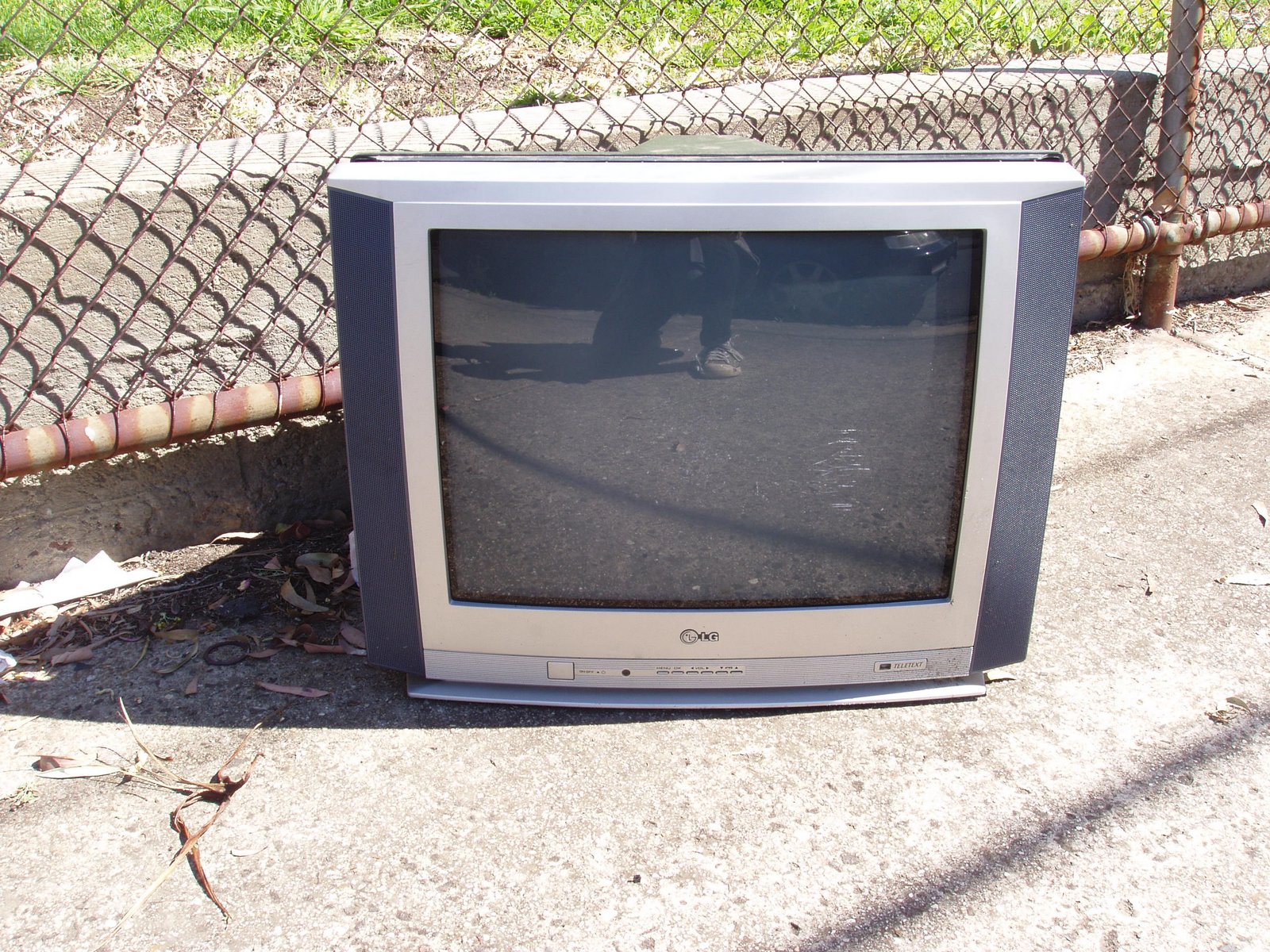
Photo shows self-portrait with abandoned tv - not ours. I have counted twelve dumped tvs in our suburb in the few weeks since ours died. Many of them have signs saying 'still working'. Who are these people who are throwing them out? And why do they dump them in the streets and local parks???

Monday, October 15, 2012

Just being and birds in the local park


She asked to go to the park.

We’d dropped her sisters at school and were on our way home. Someone was coming for lunch. The floor needed vacuuming. The bathroom needed scrubbing. The washing needed hanging out. I wanted to make soup and deliver it to a friend. The day was cold and damp, and I’d forgotten my scarf. We were on the bike. I almost said no. But...

Fifteen minutes, I said. Fifteen minutes, then home.

And at the park we found six rainbow lorikeets, learning to fly. Hop, jump, flutter, flap; they bumbled back and forth. Up on a pole, and onto the roof of the play fort. Back to a branch, and whoops-a-daisy, a bird chose a twig too weak and was flopped upside down, raucously indignant as it hung. We stood in a patch of weak sunlight, entranced.

Like little children, the birds fell into a wrestling match. They tumbled over and over the grass, shrieking and beating their wings. Watching the whirlwind of bright feathers and squawks, we hollered and laughed.

Then up they flew for more flying practice. In a moment of quiet, she rested her head against my chest and listened. Kerthump kerthump, is that your heart? she asked, while the lorikeets flapped higher and higher, into the very treetops.

The birds were gone. She hugged me, then walked to the bike trailer and popped on her helmet.

Home now, she said.

To think I’d almost said no.

Tuesday, October 9, 2012

Domestic Violence


A couple of weeks ago, a woman walking home after a night out with friends was abducted, raped and murdered; the abduction took place near the end of my street. It is, of course, the talk of my social circle; it could have been any of us. Like so many women, I go out with friends at least once a week and often walk or cycle home late. I like to be out alone at night, breathing the scents of the evening. Windows flicker with the light of the television, music drifts through the air, and I move quietly through the darkness, dreaming my suburb.

I have some concerns for my safety, of course; I've had too many encounters to be entirely comfortable. Sometimes I wear a hoodie; I'm always in flat shoes; I never use headphones. I avoid groups of men, crossing the road or ducking into shadows if necessary; and I'm not afraid of kneeing a man in the balls if he gets too close – and I've done it, too. But I also refuse to be confined to my home at night. I don't live in Saudi Arabia, and I won't act like I do.

As I get older and greyer, I take fewer precautions; sexual violence is more often directed towards younger women. Yet the woman who was snatched was not much younger than me, and I am shocked. I'm not the only one: hundreds of people have placed bouquets and candles outside the shop where she was last seen, and on the steps of the local church just down the hill. There has been a march to 'reclaim' the street, and informal nightly vigils as people stand and ponder, perhaps to pray.

This is all well and good. The crime was terrible, and it is right to think about how and why it happened; but I also find myself wondering why this very rare crime has led to such an outpouring of public grief when domestic violence is so common. A friend was telling me of a woman she met last year who was murdered by her partner soon afterwards; and of another woman, whose partner attempted to kill her and is now in prison. These crimes also happened in my suburb, but there were no public vigils and flowers in the street.

On a lesser scale, a different friend lives between two households where domestic violence is a regular event; on bad nights, she calls the police then sticks her pillow over her head to block out the screams. This year, three women I know have left verbally abusive and controlling, if not physically violent, relationships; other friends still live in such marriages.

It's not that I live among depraved people. We're all nice, well-educated, thoroughly middle-class women who know our rights; and the men involved are personable and charming – in public at least. Instead, these glimpses illustrate an awful reality: violence against women is all too common.

Feelings of violence against women, whether or not the feelings are physically expressed, are also common. Our society has a sick desire to see women harmed, and sexually promiscuous women, especially prostitutes, slaughtered; you cannot turn on the television any night of the week without seeing at least one murdered woman. It's gussied up as drama with a few twists to keep you guessing, but the fact that women are killed, and often found dismembered or rotting, night after night for the sake of entertainment is hardly benign.

And so I wonder about the flowers and the vigil. Was it really all about the terrible death of one woman walking home late at night? Or was it a safe way for women to express grief over the violence that so many experience in their own homes? Perhaps it is a bit of both.

I also wonder how much has been spent on the flowers; and how much has been donated to women's shelters, or to men's behavioural change programs? Because if we are truly concerned by violence, we will do more than attend vigils and buy flowers for a dead woman. We will also look closely at our society and what simmers beneath the surface. As friends, we will make safe places for others to talk about what is happening at home, and we will defend and support them if they decide to leave; as parents, we will teach our sons to recognise their feelings and to express anger, frustration and shame in healthy and constructive ways; and as citizens, we will direct resources towards the living women and children who experience violence every day, who dread the sounds of His car rolling into the driveway and His key fumbling in the lock, because He is coming home.

Related Posts Plugin for WordPress, Blogger...