Monday, February 27, 2012

Why not love?

 
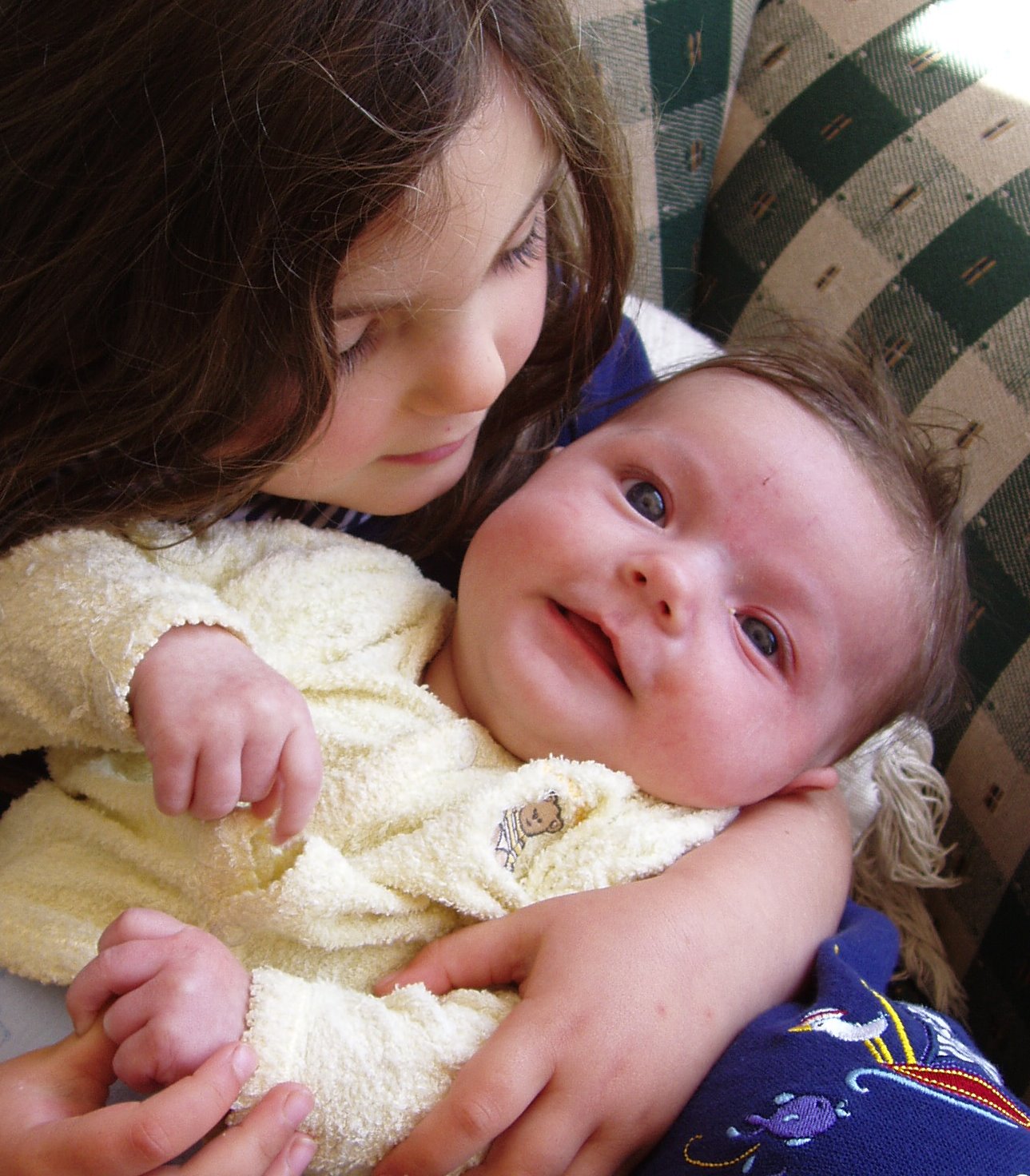
This piece appeared in The Sunday Age Faith column yesterday. As for the photo, well, what's not to love?!

***

Why not love?

Some people are naturally loving. I’m not one of them. For as long as I can remember, my first impulse has been to dislike, to feel angry, and to judge. I have fought and hurt many people unnecessarily; and I have often needed to apologise, even go through mediation, to restore a relationship damaged by my anger.

It’s not something I’m proud of.

But one day five or six years ago, as I felt myself growing furious over nothing in particular, three words dropped into mind: ‘Why not love?’

Three simple words, one little invitation. Why not love?

If it had been an order, ‘Thou shalt love’, I would have rejected it out of hand. A reactive soul who has always deeply resented being told what to do, I would have pointed out the ways I had been offended. I would have explained exactly why it was reasonable for me to be angry; with arrogance and disdain, I would have wielded my brutal honesty like a weapon; and with sickening self-righteousness, I would have justified the ensuing destruction.

But I wasn’t given a command. I was asked a question; and because of this, I felt surprisingly free. I didn’t have to react. Instead, I could engage with the question, holding it gently and turning it to and fro as I looked at it from different angles. As I did so, I realised I had an option. I could choose to go with my usual motivators, anger and fear, and lash out yet again; or I could take a deep breath, count to ten, and find a way to love.

Which option I took depended on who I wanted to be. Did I pride myself on being an angry little girl, flailing about and striking at will; or did I want to try a new path, which might just lead to kindness?

The choice was obvious. I knew what sort of adult I wanted to become.

Why not love? I unclenched my hands, and slowly breathed out. I don’t remember exactly how that day ended so many years ago; but I can say that there were no fireworks or angry tears. Instead, I recall a sense of lush green growth, a sign of renewal and hope.

I have carried the question with me ever since. Of course, there still have been many times when I have chosen not to love – always a mistake, and always more harmful to me than to anyone else. But thanks to the question, there have been many more times when I have opted to try; and in so doing, I am awkwardly stumbling my way into the wide open spaces of freedom.

Friday, February 24, 2012

Hide and seek


Sometimes I am too proud. My girls ask me to play hide and seek, and I demur. I'm too dignified to crawl under a bed; I'm too big to stuff my body into a cupboard; I'm too intelligent to pretend not to see them as they hide with one leg sticking out. Anyway, I have better things to do.

But they plead; and so I agree to play two or three quick rounds with haughty grace. I don't enter the game fully; I am pretending to play rather than actually playing. But as I pretend, something odd often happens. I wander into a room where I heard a floorboard squeak, and there is no child. I quickly check the usual places; still no child. My pulse quickens and my heart begins to race. 'Hello?' I ask tentatively into the quiet room. I check again, and perhaps then there is a muffled giggle. I look once more and finally see a small lump in a most unexpected place, hidden under a blanket. I tiptoe over, yank back the blanket, and a child bursts out; we shriek and laugh. Now it's my turn to hide.

Instead of going to one of my usual spots where I can stand quietly and check my text messages – in the pantry, behind the shower curtain, in the powder room – I race down the hall, sneak into the laundry, then set myself halfway up the stairs just out of sight; I creep onto an unmade bed and arrange the doonas over myself in a hot messy mound. With pounding heart I wait, stifling the urge to giggle nervously. When a child comes near, I hold my breath...


Still waiting...


then jump out yelling!

And suddenly I realise I am no longer pretending. Here I am, dignified old me, leaping and shouting and giggling like a five year old. I've shot from pretending to playing, just by going through the motions.

It makes me wonder what else I could master by going through the motions. By drafting small pieces day after day, could I learn to write? By acting like a faithful wife, could I plumb the depths of love? By pretending I have all the time in the world, could I acquire patience? By sitting in quietness and letting go of the voices, could I experience silence?

Could I soften my hard heart by pretending to be kind?

Friday, February 17, 2012

Riding the Bus with my Sister

Riding the Bus with My Sister

Just up the street from me live some 80 people in supported accommodation. Their problems range from intellectual disabilities to schizophrenia to frontal lobe damage caused by stroke or other injuries. Some of these neighbours are easy to get along with; we lean against our garden wall and chat about the weather or the footy. Some are just familiar-looking strangers we pass by on the street. And several are more difficult: paranoid, verbally abusive, erratic and even, at times, physically threatening.

Each person is, of course, an individual, and their problems are only one facet of their personality; but there are certainly times when I lack patience with some of them: those who chat one day and treat me as a stranger the next; those who scream abuse; those who shout and sing just in front of our house when I'm trying to settle a baby.

Meanwhile one of the crossing ladies at school is well and truly on the autism scale, and to my shame there are days I find it difficult to greet her cheerfully yet again as she obsessively calls out everyone's name, holds the same short conversation as yesterday and the day before and every day for three years before that, and refuses to believe that a young child could be terrified as she shoves her large face into the pram.

So it was with great interest that I read Riding the Bus with My Sister, by Rachel Simon. Simon's sister Beth has mental retardation (Simon's phrase). Beth is able to live by herself in a form of supported accommodation, but she does not, and possibly cannot, work. Instead, she spends her days riding buses. Every morning, she rises early and heads to one bus stop or another, then criss-crosses town meeting up with her favourite drivers. On the bus she sits in 'her' seat, cattycorner to the driver, plays music on her portable radio, and makes loud observations about life, the bus drivers, fellow passengers and whatever else excites her attention. One year, Beth exacted a promise from Simon to spend twelve months riding the buses with her whenever possible, and the book is the result of that year.

Simon uses the book to tell several stories. The first is, of course, the story of riding the buses with Beth, who is spirited, belligerent, defensive, large, loud, opinionated, bossy and unforgiving. Simon charts a year of early starts and sisterly conflict; bus drivers and health professionals; and mad dashes to public bathrooms at timing points. Some of the bus drivers are particularly charming. Among their ranks are story tellers, philosophers and comedians, and their hospitality towards Beth far exceeds their duty as drivers; these stories alone are worth the read.

The book also documents the relationship between the sisters. Before the year, Simon and Beth lived in different cities and had grown apart. Simon writes quite honestly of her discomfort with Beth's issues, both historical (having the sister in the 'slow' class at school) and current. Beth sounds exasperating, and Simon struggles through the year to come to terms with who Beth is now, rather than with who she wishes Beth might be. She investigates how much of Beth's personality may be an expression of her disability, and gains some new insights into why her sister is the way she is. Despite her ongoing ambiguous feelings about some aspects of Beth's personality, Simon documents a growing respect for her resourcefulness and a much gentler love for her.

Her year with Beth was also an opportunity for Simon to reflect on her own emotional state. Her significant relationship had fallen to pieces; she was working insanely long hours and was deeply lonely. Slowing down and spending time with Beth, as well as the more philosophical, pastoral or compassionate bus drivers, helped her reflect on what she had prioritised in life, and enabled her to make some different choices.

The final part of the story is their shared history, told in flashbacks through the book. Their parents split up, and their mother fell into a pattern of abusive relationships which ended in the abrupt abandonment of her children.

Simon's slight tendency to make everything neat is more than compensated for by the dynamic people in this book: Beth, her long term boyfriend Jessie, the bus drivers, even Simon herself. It is a pleasure to read. But what makes Riding the Bus really valuable are the questions it raises. What is it like to have a sister who is largely oblivious to one's own needs and the needs of others? How do you talk with someone like this? Who is responsible to care for such a person, and what supports need to be in place? What are the emotional and relational costs of caring for such a child? How liberating is self determination if the person making decisions is constantly self-destructive? What are the ethics of sterilisation when someone is sexually active and loves small children, yet is incapable of caring for a baby? How can someone express hospitality through their work, and what are the limits? Over the course of the book, Simon grapples with these and other difficult questions from a very personal vantage point.

It's a book which makes me think carefully about how I treat my neighbours, my crossing lady, or anyone else with a mental illness or disability. There are certainly times when I want to shun one or another because, quite frankly, they are a pain in the butt. Other times I am tired and grumpy and lack the patience to have yet another boring conversation about the weather. Riding the Bus with My Sister is a great gift because it reminds me to slow down, and have patience.

It shows how one such person is a dynamic whole person, embedded in a community, and reminds the reader of the obvious but easily forgotten point that people with mental disabilities have families, histories, stories, secrets and desires, just like everyone else; and, like everyone else, they come bearing gifts. Whether or not we take the time to recognise and receive those gifts is up to us.

Tuesday, February 14, 2012

Remembering Home

 
For months now I've been haunted by a house I haven't lived in for twenty years. How haunted? Haunted enough to google it, to drive forty minutes out of my way to sit out front in my car and stare at it, and to have it inhabit my dreams night after night. If it were for sale, I'd probably try to persuade my husband we need to buy it. It wasn't a particularly lovely house. It was oriented south into darkness; the kitchen was tiny and strikingly ugly, with bright green cupboards and burnt orange carpet tiles; the garden was nothing much at all. But for the first fourteen years of my life, it was the house we returned to each time my parents moved for work; it was our home.

I feel like my daughters should experience life in this house. I'm actually quite frantic that they do. I want them to know how ugly the kitchen was; to lock themselves out and remove the louvred windows and climb in the kitchen window past the recipe books; to open the preserves cupboard in the dark hall and gaze at the rows of jams and plum sauce, and inhale the scent of cloves. I want them to lie on the nubbly grass green carpet in the study and look up unfamiliar words in the dictionary there; and hide in the garage full of cobwebs and climb the jacaranda tree and race leaves down the concrete gutter which ran along the side of the house.

Of course, that house doesn't exist anymore. It looks like it always did from the facade, but a little while ago, during an especially acute fit of nostalgia, I dropped in. Incredibly generous people that they are, the current owners offered me a cup of tea and we sat and talked about the area, the way we remember things, and how everything has changed; and I admired what they'd done with the place.

But I can't have my house back. It's been renovated, and what I remember is largely gone. Instead, I'll have to tell my children stories.

Stories about my father, who got up at six every morning to fire up the coal hot water heater. My father hated a cold shower more than anything in the world, so day after day he would build an enormous coal fire in the boiler, then wash his sooty hands and forearms with yellow soap in the old laundry trough; day after day the hot water would boil over and shriek and spit jets of steaming water onto the garage roof and there would be steam in the pipes and no shower for anyone. 'Joooo-ohn!' my mother would yell as he sheepishly observed the overflow tank shaking and shuddering; and we'd all have to wait til it cooled down, anxious eyes on the clock, before we could bathe.

Stories about the freesias my parents removed from the side, hundreds of small sweetly scented flowers. One year, my mother held a campaign against environmental weeds, and freesias were suddenly taboo. So on hands and knees my parents dug up every little bulb, then mulched heavily and planted natives. The natives thrived in feathery loveliness, but how I missed the gentle fragrant flowers.

Stories about the neighbourhood kids, and the way we used to roam the street until dusk. We played cricket and catch and jump the chain; we played hide and seek and hit sticks and stones around the vacant lot behind the petrol station ; and when we weren't in the street itself, kids flowed between the houses.

Our lounge room had old wallpaper printed with weeping willows, and one year my parents scraped it off to reveal dark wood panelling instead. I preferred the weeping willows. The carpet was corrugated plum, and my sister once went for a run without her nappy and dropped little pellets all the way down the corridor; my mother ran behind her picking up each one with a tissue as I held my sides and shrieked with laughter.

Our bathroom door was the colour of pumpkin. I'd go in there just to gaze at the door and drink in colour.

I remember washing day, and hiding pegs in the sheets hanging from the old Hills Hoist; and afterwards, great piles of washing waiting to be folded or mended or ironed. What wasn't covered in washing was stacked high with books and papers and Things to Do; it was a messy crowded little place.

There is so much I want to tell my children. It's been over two decades since I last lived in that house, but for all the moves and changes in my life, it still feels like home.

But lately it occurs to me that the house we live in now is forming the same sorts of memories for my children as the house I grew up in formed for me. My kids don't need to live in the other house to experience home. They have a home, with its own quirks and hidden places and special trees and stories; and if I pull myself out of the past and take a slow look around, I can see that it is good.

Tuesday, January 31, 2012

Not quite drowning


At last, the heat has broken and a gale from the south has charged through the house, sweeping out the stale air before it. Now I sit, well rested after the first cool night in weeks, and wonder why I don't feel fresh, too. Instead, I feel stale and dried out, with nothing much to say.

But the sort of writing I do needs great swathes of silence; incompatible with a seven week school break and three girls screeching around the house. Next week, though, school begins again. My two older girls will go back; and the third will start kinder, which I can only think of as six hours each week of silence. We are also starting a child swap: in return for looking after a delightful four year old one day a fortnight, on alternate weeks my youngest will be at her house and I will have a whole day alone.

Since I had my first child eight and a half years ago, I've rarely had a full day to call my own. We chose not to use professional childcare, and our combined commitments mean that days to myself are very rare indeed. I've been happy enough with regular half days, but suddenly today, with a week to go, I'm hanging out to be alone for hours on end. I'm looking forward to a time when writing isn't at the expense of everything else. Having enough time to do more of other things – exercise, read, listen to the wind – feels spacious, luxurious, a great privilege; who knows what will unfold?

In the meantime, though, I wait, up to my ankles in paper snowflakes and French knitting and marbles and jigsaw puzzles and all the other things that have drifted to the floor; up to my waist in Charlie & Lola and The Muddleheaded Wombat and A Necklace of Raindrops and all the other books I am required to read aloud; up to my elbows in Cluedo and crazy eights and ship o' fools and ludo and all the games that require my participation; up to my ears in kids' music and play dates and the horrible sounds of squabbling sisters...

In a sea of young children I wait, not quite drowning, one arm raised to next week.

Thursday, January 19, 2012

Caffeine hits and sugar spikes

More than a year ago now, I wrote about how much I needed wine in the evening. I didn’t drink half a bottle, just a glass to settle my jangled nerves while the kids squabbled and I cooked. It was either that or shouting everyone to table and bed. I felt bad about the dependency, but there it was.

Nine months later, I was placed on a very restrictive diet: no sugar, gluten, dairy, fruit, alcohol, or caffeine. I was worried about how I’d manage without that glass of wine at the end of the day, but my health problems were sufficiently severe that I adopted the diet almost immediately.

To my surprise, I coped just fine. There’s been no real yelling, in fact less than usual, and, while I missed the social aspect of wine with friends – not to mention toast with butter and jam – I didn’t miss the daily glass one bit.

Had my personality suddenly changed from wound up spring to positively yogic? Or had I been deluded all this time into thinking that my jangled nerves couldn’t get through a full day without a glass? Well, neither, really.

Four months into the diet, it came time to reintroduce or experiment with the restricted foods. Like the good girl that I am, I started not with fresh fruit (it blows me up like a balloon), but alcohol. Last Thursday, an old friend came for dinner and, in for a penny in for a pound, I drank two thirds of a bottle of wine. I was on top of the world, and the next day felt fit as a fiddle. It was wonderful. And while I don’t intend to start drinking every night, it seems I can enjoy wine with friends from time to time – and I will. Wine restores me to my rightful place as the storyteller at the dinner table, a role that I don’t fill to the utmost when I am stone cold sober.

Next I tried caffeine. Within minutes my body filled with adrenalin, my heart started to race, my hands grew sweaty and I became highly anxious. A sense of foreboding swelled and bobbed like a threatening grey balloon just above my head; my chest constricted in fear. I wandered around for a few hours waiting for the axe to fall, but it never did. Instead, the caffeine gradually cleared out of my system and all was right with the world again. Hmm, not so good.

I had always assumed that being anxious and highly strung was just part of my neurotic and irritating personality – but was it since I started drinking coffee? I certainly had a lot to be anxious about at that time. I had recently moved countries; my mother was very ill; and a lot was going on. Perhaps the coffee only exacerbated how I was already feeling, back then. Now, however, there is little to be anxious about, yet my high levels of anxiety had faded away only when I went on the exclusion diet.

A few days later, I tried sugar: pure candy, which I never usually eat, and with nothing to slow its effects. Within fifteen minutes, I was screaming like a banshee at a child who had left her shoes in the hallway. When I had calmed down I apologised, and had a think.

I had previously suspected sugar to have a volcanic effect on my temper, which is why I rarely eat much of it. Having completely eliminated all sugar for four months and, during that time, never shouted unduly at the kids; and then, having eaten three test candies and positively erupted, this was proof enough for me.

I was seventeen when I began drinking coffee, which means I’ve had nineteen years of two to four coffees a day, sometimes more, with a small sweet treat to pick me up in the late afternoon.

Nineteen years of jangled nerves and pounding heart, with a sugar spike just before dinner time.

Add children to the mix and it’s no wonder I self-medicated with alcohol. Take away the caffeine and sugar, and dinnertime is fine; no wine required. I realised that it wasn’t the kids who were the problem at six o’clock; it was me and my bad habits.

It’s shocking to think that I have razzed myself up daily for almost twenty years and never really noticed. I wrote myself off as an anxious person who doesn’t cope with stress when, in fact, the things I don’t cope with are caffeine and sugar. In other words, all this time I have been causing the majority of my stress through the things I have chosen to eat and drink.

I don’t know whether to be frustrated that we have endured so many years of my carefully reined in bad temper, a temper that now appears not to be an intrinsic part of my personality, or just deeply relieved that I have found the key to letting the temper fade away. Mostly, however, I feel glad for my kids that I have found a way to be calm. I no longer have to use all my tricks – counting to ten, leaving the room, or transforming the shouting into an operatic aria – as I now rarely feel the surge of rage that leads to the urge to shout.

I also feel sad for my own history. My mother was far more highly strung than me. A wrong word could set off an explosion, and I was the expert in wrong words. Our relationship was always fiery, never calm. Now I wonder if she, too, was winding herself up every day with her dozen cups of tea and a sweet biscuit in the afternoon. Meanwhile, she tried to fit in a lot more than me, combining child rearing with demanding work. She was always tired, and always felt guilty because she never had enough time to do everything she wanted. If she was feeling as physically wound up and anxious as I have been feeling, then, combined with the stresses she placed on herself, it is no wonder that she exploded regularly; we just couldn’t seem to get along.

I have a fantasy that we could meet each other again, no caffeine, no sugar, no work pressures. No shouting, no surges of aggression, no adrenalin spikes, just two women on odd diets but otherwise quite ordinary going for a stroll along a riverbank. In quietness, we could listen to the water tumbling by. We never knew each other calm, but I wonder whether, in such a space, we might find a gentle peace.
Monday, January 9, 2012

On Silence

This piece appeared in The Sunday Age Faith column yesterday. The church is the South Yarra Community Baptist Church, but if you come looking for a blogger with three young daughters, beware, there are two of us in our tiny congregation!

***

On Silence

When I was a child in church, prayer was long and wordy. Responsive prayers dragged on for hours; extemporaneous prayers were worse. Forests grew and glaciers melted in the time it took some to say their piece. I would shift in the hard pew, trying to get comfortable, and wiggle my toes in their Sunday shoes dangling above the floor.

Encouraged to pray publicly from an early age, I could think of nothing to say. God didn’t need me to point out what was wrong with the world; I was pretty sure God had a handle on it all. On the other hand, I was reluctant to raise personal matters out loud, so I kept quiet in the stiff silence of disapproval. At home alone, I couldn’t pray either. When I tried, I felt awkward and fake. My words rose no further than ceiling, there to rebound and fall heavily to the floor.

For a decade or more, I didn’t pray at all. The words didn’t work; I didn’t know why. I stumbled in and out of churches, wondering, until by God’s grace I found myself at a church which taught the beauty and wonder of silence. Like most churches, we sing some prayers and say others – but then, together on a Sunday and separately during the week, we make time to sit quietly and let God in.

In silence, no words are necessary. I learned that I don’t need to say anything; instead, I just listen. Listen to the voices and the chatter in my head. Listen to the errands I am planning, listen to the worries that spin around, listen to my self-condemnation that I can’t make silence. I remind myself that it takes practice, practice and gentleness...

And as I practice, and identify the voices, and let all the noise float away, gradually I become aware of a cool sea breeze, sweeping in like a southerly and driving out the stale air; and that’s when I begin to trust.

With it may come a sense of calm, forgiveness, or hope. Other times, it’s accompanied by an image. Green tendrils, burgeoning new life, throw out joyful shoots. Arms flung wide welcome me in. Laughing children run into the sky. A universe of stars rumbles with laughter. An old typewriter waits just for me.

From such an experience may arise a new understanding, or a direction, or an affirmation. Other times, it offers only mystery, to be held gently and pondered; or solace when it is needed most.

Whatever is there is always surprising, always a gift. From silence, I surface, restored. Quietly, I stretch and take a deep breath; and quietly I get back to work.

Related Posts Plugin for WordPress, Blogger...