Monday, July 28, 2014

How to cut down a school tree


Before you cut it down, get two opinions. Ensure you can’t save it before arranging to have it felled.

While it’s still standing, visit each class. Explain what is going to happen, and why. Let the children ask questions. Answer them. Send a letter home to each family and let them know. Offer to answer their questions, too.

Hold a short ceremony at the base of the tree. Let the children tell stories. Honour the tree. Name the gifts of shade and clean air, and the place for birds and bugs and butterflies to rest. Acknowledge the countless times children have played among the roots, leaned against the trunk, and gazed into the branches. Say good-bye.

Have it felled. Have the branches sawn into six foot lengths, and scatter them around the grounds. The children will build them into cubbies. Have the trunk sawn into logs, and leave them in the schoolyard, too. Children will walk, climb, balance and sit on the logs, and watch the shadows dance.

Keep a special disc. Sand and polish it, and hang it in the front office for all to see.

Use a good arborist. He will leave a five foot trunk, and carve it into a throne.

***

A large old tree had to be removed from my daughters’ school recently. This is how it happened. Given the deep connections that many children form with special trees, it seemed just about right. Thanks Trevor and Chris and everyone else involved in the process.

Monday, July 21, 2014

We wasted money on a family holiday...

Hats off to all those parents who love the school holidays! Me, I enjoyed the first week. My daughters’ friends came and went; we spent a lot of time outside; and I was pretty calm. But the second week was something else. Because there is nothing my husband likes more than to go away As A Family, we went away As A Family to the goldfields. It was freezing, it was raining, and we were mostly trapped inside with no other kids to distract ours. My kids bickered and I sniped and it really wasn’t pleasant at all.

On the seventh day, I threw a tantrum. We were walking down the main street in Kyneton when I suddenly stamped my foot on the pavement and told the kids to go away. They shuffled off, then looked on anxiously from half a block away while I asked my husband why, exactly, we had had children. ‘I hate kids,’ I moaned into his chest, ‘I should never have had them. I was born old. I’m an adult’s adult and I like adult things. I like to look at pretty things in shops. I like to sit round in cafés and eat nice things that I didn’t cook and not have to tell anyone to sit down. I hate being kicked by careless feet under the table. I want to wear good shoes and have nobody step on them and I’ve had my toes stepped on eight times today already and I haven’t even had lunch yet and anyway we’re going to that stupid café because the kids keep jostling each other and I can’t trust them in the smaller one and why can’t they just leave each other alone…’ and blah blah blah blah blah.

He held me close while I pulled myself together, and then we went to that stupid café which is really quite okay. I ordered a double shot latte and hot chips with lime aioli and Spanish eggs. I had my toes stepped on two more times and was kicked repeatedly under the table and my kids clattered their cutlery onto the floor once or twice but thanks to the coffee, chips and eggs (such a classy gal) I almost felt okay.

It’s not that I don’t love them. My kids are terrific people, funny and gentle, creative and kind. And it’s not that I don’t love children; I enjoy chatting and playing with other people’s kids. But when it’s just me and my family, we squabble. The kids are at each other’s throats and I ignore it for a while. When I can’t stand it anymore, I give them options. Then I separate them. Then I explode. Then they get even grumpier and the cycle begins again.

As a family, we rarely bring out the best in each other. We need other people for that. Neighbours and relatives, work, family, church and school friends: when we’re with other people, we all thrive. We spend a couple of weeks each year holidaying with a family of six. With the five of us that makes eleven people in a house with one bathroom, with children aged from a young baby to a teenager – it should never work. But the last time we spent a week together I realised on day six that I was yet to rebuke a single child. Somehow, in the crowd, everyone just got on with things. Sometimes I did stuff with kids; sometimes I did the shopping and cooking; sometimes I went for a walk by myself. At the end of the week, I felt like we’d all had a break. My kids were lovely people, and all was right with the world.

Maybe the nuclear family works for some people. My husband certainly seems to enjoy it more than I do. Me, it’s something I’m stuck with, so I try to find ways to live differently. We eat with neighbours and relatives; we spend time with other families; we holiday with friends. But a couple of weeks ago we travelled As A Family, my kids bickered endlessly, and I blew up.

I reckon you could say I went nuclear.

PS – And yet again, The Idle Parent is shown to be right. From the Manifesto: ‘We don’t waste money on days out and family holidays.’ One day I will learn. Sigh. For my response to that most excellent book, click here.
The Idle Parent: Why Less Means More When Raising Kids

Wednesday, June 25, 2014

Response: The Free

The Free

We hear a lot about American extremes, whether it’s gossip about the extremely wealthy, or reports of violence among the extremely disaffected. But what of those who will never be successful, but are neither on the rampage nor quite on the skids? For that, we once relied on Joe Bageant; but since his untimely death a couple of years ago we have needed to look elsewhere.

One serious contender is Willy Vlautin. Vlautin, who has worked in warehouses and at painting houses, is also a gifted and elegant writer. He writes essays and novels and, as songwriter and vocalist for Richmond Fontaine, songs; and he has just released a novel about ordinary people in the mess that is America.

The Free opens when Leroy, an Iraqi veteran suffering brain injury and posttraumatic stress disorder, wakes in the night. To his astonishment, he is having a rare moment of clarity. It has been so long since he has experienced this, and he is so profoundly grateful for the gift and the beauty he perceives, that he cannot bear to descend again into darkness and confusion. He decides to liberate himself, and attempts suicide. This is a framing device for the character-driven novel which goes on to describe small, good things (as Raymond Carver once put it) done by small, good people who are themselves on the brink of collapse.

Leroy lives in a home for servicemen with acquired brain injuries, and Freddie, the nightwatchman, finds him. Freddie tends his wounds, calls the ambulance and Leroy’s mother, and gently helps the other servicemen back to bed. As the story progresses we learn that Freddie is crippled by medical bills. He works in a paint store by day and in the group home by night; even so, his house is twice mortgaged and his power is about to be cut off. Despite these pressures, he finds kind words for the counterwoman at the donut shop each morning, and drops by the hospital between workplaces each evening to sit with Leroy and leave small gifts on his nightstand.

Coming in and out of Leroy’s room is Pauline, a nurse. Pauline becomes particularly attached to one patient, a young teenage runaway; and she also cares for her mentally ill father who spends his days on the couch watching TV. We also meet Leroy’s mother and ex-girlfriend, and numerous other minor characters.

Their interwoven stories are studded by Leroy’s PTSD-driven nightmares. In his mind, Leroy and his ex-girlfriend are on the run from the super race. Having been marked as cowards, they are being hunted down for slaughter. Images of war – hangings, shootings, bloodbaths – pepper his visions, which gradually reveal his self-understanding as someone who is unable to integrate his experience of war and is permanently damaged as a result.

It is difficult to write about decent people without mawkishness or naïveté, but Vlautin manages it with rare grace. These are no saints, just people getting by – but choosing to get by as well as they can, given their crushing circumstances. His spare style recalls Carver’s lean prose, spliced with Leroy’s Orwellian dystopic dreams.

Although it is a story about individuals, The Free also illuminates the toxic effects of untrammelled capitalism. Leroy joins the National Guard to impress his boss and keep his job, not knowing it could lead to overseas service. Freddie is bankrupted by private healthcare and criminally low wages. Although he flirts with potentially lucrative illegal work, the timing of other events means he is still shunted into sub-standard housing. Pauline’s father lives in cold filth for fear of heating and water bills. Others live on the streets or in squats, or get involved in endeavours that lead to prison. The Free touches on these and many other issues as it describes life in the corporatocracy and ponders where people on the margins find freedom. And while Vlautin has no paradigm-shattering answers, he does offer small and precious glimpses of grace.

The High Country [Digipak]

Friday, June 6, 2014

Response: Eating Heaven


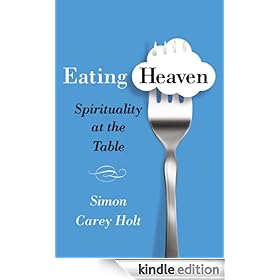
I may be biased, but my friend Simon wrote a terrific book last year, Eating Heaven. And I loved it. I read it very slowly and savoured every bite.

Each chapter focusses on one table: the kitchen table, the backyard table, the café table, the restaurant table, right up to the table of communion. And each chapter has stories, interviews, history and reflections on that table: eating with mum and dad in the kitchen, sharing a meal with marginalised men and women at a free lunch, having a coffee with a chef between shifts, and so on. Each chapter then ends with a recipe reflecting the type of eating that happens at that particular table.

The book is layered and rich, reflecting Simon’s background as trained chef, sociologist, theologian, and Baptist minister. It also reflects his love of Melbourne in the descriptions of laneway cafés and linen-topped restaurant tables; the juxtaposition of social inclusion and fancy pastries at one downtown church; and the transformative power of eating together in a multicultural city. Whether reminiscing over crowded kitchen tables or backyard barbecues, or savouring the perfect café latte or fancy restaurant dinner, Simon is always thoughtful. In a culture of empty food porn, his voice nourishes and refreshes. He not only enjoys the food, but also contemplates how poverty and wealth, hospitality and exclusiveness, celebration and mourning, and many other issues play out when we sit down at the table. His gentle questions and tentative suggestions are always thought-provoking.

More, they have an effect. Eating together is central to being human; and Eating Heaven reminds us of this gift. In my own household, reading it has triggered a couple of changes. For one, we have returned to a more intentional saying of grace. Despite trying various things over the years, grace had become a rushed magic formula that one or another kid would gabble as they reached for the serving spoon. It was worse than if we had not said it at all. But after reading this book, I have asked that we return to saying grace properly. Now we move between a candle and a responsive prayer; a minute’s silence before the meal; or held hands and a song depending on the mood – and we are loving this grateful pause at the end of the day, this moment of being together before we eat our dinner.

Eating Heaven has also recalled us to simple acts of hospitality, which we largely left behind in the maelstrom of having a third child. A few years on, we’re again able to make time for a coffee with friends, or invite others to eat with us in our home; and Eating Heaven has been a catalyst for thinking about why we eat together and how to do it well.

The stories, reflections and very good questions make this a book to savour, and slowly digest. Thank you, Simon.

Wednesday, May 28, 2014

Theodicy, empathy, and a 5-year-old


We drove to school. When we arrived, my five-year-old daughter asked, ‘Where’s my backpack?’

‘Don’t you have it?’ I asked. ‘No,’ she said. ‘I left it on the footpath for you to put in the car.’

‘But you didn’t tell me,’ I said, ‘and I didn’t see it. Wasn’t I in the driver’s seat already?’

Her face began to crumple. ‘Don’t worry,’ I said, ‘let’s go in to class. And then I’ll drive home and get the backpack and bring it to school.’

Inside I fumed. I was meeting someone at 9.30; and I had better things to do than drive back and forth between home and school. But I gave her a hug, explained what had happened to her teacher, grumbled to another parent, and headed home.

No backpack.

I checked the house. No backpack, and I remembered having seen her carry it out of the house that morning. I checked the car again, and the veranda, and the front garden, and asked the neighbours. Still no backpack. So I made a second lunch, filled up a spare water bottle, found another dollar for the canteen, put it all in an old bag, and dropped it at school. Then I went to my meeting, half an hour late.

Later that day I searched again, to no avail. If it had been stolen, I thought it would probably have been emptied out and dumped near the railway line. So I walked to the dodgiest spot and there on the ground among the broken glass lay two forlorn loom bands. They were from a pack that she had wanted to share with friends at school. I checked a dozen or so dumpsters, hoping to find the bag itself, before I gave up.

What sort of person would steal a little kid’s backpack? It had the name of our primary school emblazoned on it; there was no way it belonged to a teenager, let alone an adult. And as I began the inventory of what had been lost, I felt more and more bewildered. What had they gained? A scuffed school backpack, useful for one school only. A dented water bottle. A grubby lunch sack. A gluten free soy free lunch: corn cakes with cheese, and a mandarin. A prep reader. A school library book. A bike lock. A little girl’s raincoat. Her favourite, irreplaceable, cardigan. And a dollar for the canteen.

It would cost us well over a hundred dollars to replace everything. And for that, someone gained a single dollar.

My bemusement turned to fury before dwindling into sadness. I couldn’t imagine what it would be like to be so desperate, and have so little empathy, that I’d steal what was clearly a young child’s bag. The thief had big issues to deal with. We, on the other hand, could easily replace what had been taken, and even find a new favourite cardigan. The only thing that mattered was how we handled it with our kids.

That afternoon, when they were home from school, I explained to my daughter that someone had stolen her backpack. We’d have to replace it, and everything that had been inside.

She had a cry, and a big cuddle. ‘Meanie bum,’ she said. I agreed, and said that it was right that she was angry. Nobody should take anyone’s stuff.

She was quiet for a few minutes. Then she asked, ‘Why are bad people made?’

And so I told her how I understand theodicy. All of us are sometimes good and sometimes bad, I said. Every time we make a choice for good, we strengthen that part of us. Every time we make a choice to be mean, or dishonest, or violent, we strengthen that part of us. The person who stole her bag would have made lots of choices for bad, and so that part of them was very strong; they probably just took her bag without even thinking. It wasn’t personal, I said. It wasn’t about her. And we don’t know why they made those choices; maybe things had happened in their lives that made it hard for them to choose good. I told her we could be angry at what they did, but we didn’t have to hate the person who did it. In a few days or weeks, we might even feel a bit sorry for them.

She thought for a while. Then she said, ‘Maybe they took it because they miss their mummy. Or maybe because my bag reminded them how happy they had been at primary school. But they’re still a meanie bum.’

‘They sure are,’ I said, and gave her an extra squeeze and a kiss on the top of her beloved head.

The next morning, as they were getting dressed, one of her sisters pulled out a hoodie that was getting a bit small. She turned to her younger sister and asked if she would like to have it. My five-year-old beamed and pulled it on, and it immediately became the new favourite. We bought a new backpack, lunch sack, bag tag, and everything else, and life has moved on.

***

Well, almost. I had left my daughter’s loom bands where they lay among the broken glass; they are slowly fading. Now I walk past them several times a week, and whenever I see them, I think about the person who stole the bag. I wonder if they miss their mummy; I wonder if they were ever happy at primary school. I give thanks for my youngest daughter’s empathic nature, so ready to think about why someone would be mean. I give thanks for my middle daughter’s thoughtful and spontaneous handing over of a hoodie when her sister needed to wear a hug. And I pray that one day the thief will experience such empathy and generosity, and be able to recognise it as gift.

Tuesday, May 20, 2014

Response: Life Drawing: a novel

Life Drawing

It is rare that one reads a soliloquy on a long term of relationship, but Life Drawing is just that. Gus (short for Augusta) and Owen have been together for a quarter of a century, and their relationship is coloured by grief, a betrayal, and their inability to have children.

The novel begins with the fact of Owen’s death, then goes back in time to tell the story which lead up to it. A new neighbour has moved in, disrupting their rural solitude, and the resulting relationships have deep ramifications. This structure gives the book the shape of a thriller, if a rather beautiful and sedate one. (And I predicted the ending less than halfway through: not very thrilling, perhaps.)

However, the plot is not the point of this book. What makes it special is the portrait of a long marriage, seen through the eyes of Gus. Intimacy and solitude are woven together; the partners negotiate with and allow for each other in a careful, thoughtful dance. Gus observes her husband and herself with an acute eye, moving between love and anger, guilt and frustration, affection and jealousy. At times she has the eye of a lover, at other times, a maternal eye. Their sex life ebbs and flows, from non-existent to raunchy; from passionate connection to ‘the sex that’s like the decent enough music you listen to because the drive is so long and it’s the only radio station you can pick up’. Like every marriage, they navigate difficult emotional terrain; they interpret each other’s behaviour; they talk and keep quiet; they makes mistakes and choose kindness; they eat lunch.

As well as the marriage, Gus’s relationships with their new neighbour, Alison; a former student, Laine; and her father and sister are charted with intelligence and restraint. So too are the long-term effects of betrayal, guilt and grief. These depictions felt very true: closely observed, honest, and wise, and it is for this that I recommend the book.

My only wish was that it had ended differently. The denouement felt unnecessary, pandering to the more sensational expectations of a television audience rather than hewing to the quiet wisdom of the rest of the book. It detracted from what was otherwise a very thoughtful meditation. I’d have loved to have read this book one page short of chapter 21, and had the preceding story shaped accordingly. However, in the final chapter, Gus posits different ways the story might have continued. This reader, then, suggests reading this otherwise moving novel, but deciding on one’s own, preferred, outcome. I’d go with the last paragraph of the novel, perhaps.

Tuesday, May 13, 2014

Winners and losers in kids' sport


My daughters are losers. They play for a soccer club which focusses on teamwork, fair play, cheerful attitude and making up really cool chants – and neither of them has yet won a game.

Recently one of my daughters played against a side that was surprisingly tall. My daughter’s team kept things to a nil-all draw for the first half, but in the second half, they ran out of steam.

Losing didn’t seem to bother the team too much. Instead, they congratulated each other on keeping this bigger team to a draw for the first half. But the parents and coach looked at the other team, and sighed.

Quietly, the adults applied to the football federation for an assessment of the other team. The federation found that the other team contained a number of older girls, and so that team was re-graded. When the decision was made, our club notified us calmly, with a hint of an eye-roll and a smile. No railing at the other team, no suggestion that things were unfair, just a note that this was so and which way the ruling went.

I wondered to my husband whether the other team had made a mistake. He looked at me disbelievingly. Then he told me that when he was 11, he had been in a team which regularly played against teams stacked with older kids. Even in his own team, there was some suggestion that kids might lie about their age so they could play down a grade and win more. And, like my daughters’ teams, his team too always lost.

But imagine what sort of parents they have, he said, and what sort of adults those kids will grow up to be: taking advantage at every step, lying on their taxes, cheating on their partners, all driven by their pathetic egos.

I thought about the girls on the other team, and their coaches and parents, and felt sad. What sort of world do we live in, that the outcome of a child’s game matters so much to adults? Why is winning so important to parents that they ask the kids to lie? And what sort of hollow victory is that?

Surely it is much more important for kids to learn fair play, and teamwork, and how to keep your chin up when the odds are stacked against you? Surely they need to learn how to deal with frustration and disappointment? Because if they do it well, they will also learn to be steadfast, resilient and honest, qualities that will stand them in good stead as human beings.

And as for losing all the time, well, if either of my daughters’ teams ever win, you’ll hear the victory dance from here to Timbuktu. It won’t be some empty victory which leaves a bitter taste in their mouths. Instead, it will be something really worth celebrating.

Neither of my daughters has won a game yet, and because of the vagaries of the fixture, my older daughter’s team had to play the surprisingly tall team a second time before the re-grading took effect. My daughter’s team put on a good show, but of course they were beaten. Even so, I reckon I know which team was losing out.

Related Posts Plugin for WordPress, Blogger...