Monday, July 22, 2013

Work, Study, Housework, Homemaking: Some definitions


In my last post, I wrote about work-life balance. I've spent my whole adult life wondering about the nature of work; yet in that post I used the word without definition or clarification. Now I'd like to unpack it.

The day I wrote that post, I used the word to mean 'activity which is not directly related to managing children or the household'; that's what I always mean when I say 'work'. My husband works: he goes out of the house and does stuff which is not related to spending time with children, cleaning the house, washing clothes, or buying, preparing and serving food. Certainly the money he earns contributes mightily to the upkeep of the household, but when he is 'at work', he is not engaged in a hands-on way.

When I say that I 'work', I mean that I am studying or writing. I don't differentiate, when I speak, between all the aspects of 'studying' and 'writing', such as reading, mining bibliographies, meeting with supervisors or other students, attending seminars, collecting library books, sighing over crappy drafts, or gazing out the window wondering what the hell I'm trying to do. Nobody needs to know precisely what I do in those hours, just as nobody outside accounts needs to know when my husband meets with a client, drafts a document, ducks out for sushi, or gazes out the window wondering what the hell he's trying to do, too. Like him, I just say 'work'. It's easier that way.

So for me, 'work' is industrious activity outside the orbit of the household. Because I study, it's not financially remunerative; maybe one day it will be.

Why do these words matter? Quite simply, because language is powerful. I have found that if I say 'it's my study time', someone will always suggest meeting for coffee or doing an errand; and when my study times are measured in three hour blocks, this is disastrous. On the other hand, when I say 'it's my work day', nobody asks anything of me. We take 'work' much more seriously than 'study', even if the person using the word 'work' really, secretly, means 'study'.

It's magic! And it's crazy. Meanwhile, an old friend of mine recently worked out how much time she has spent breastfeeding her very young baby; it was many more hours than full time employment, and didn't take into account the time she has spent changing nappies, washing, or caring for her two-year-old. Yet her activities don't fall into our economic or political models of work, despite being physically and emotionally demanding, very time consuming, and of enormous benefit to society. Why do so few of us describe caring for young children as 'work'?

I cannot count the times I wanted to punch someone when they asked me, the mother of three pre-schoolers, when I was going back to work. If, as regularly happened, they went on to say 'it's such a privilege to be able to stay home', I'd have to sit on my fist. Caring for three young children always felt like work enough for me, especially as I often also cared for an extra child or two. If, however, I had been employed as a childcare worker – and put my own kids in paid care to do it – everyone would have given me a pat on the back for re-entering 'the workforce'.

Many mothers I know privately describe their paid work as 'time off'. When they're 'at work' they can concentrate with no interruption; they can grab a coffee and have a few minutes' peaceful contemplation; they can use their minds and training and see the fruits of their labour; they earn money and status because they are 'employed'; and they can pee alone. Once they collect the kids, they're feel like they're on a hamster wheel of taxiing, cooking dinner, listening to readers, washing dishes, bathing kids, tucking them into bed, putting on a load of washing, sweeping the floor, hanging the washing out, and preparing lunches for the next day.

I used to think these friends of mine were being funny when they described their jobs as 'time off', but now I have more time for 'work', that is, study and writing, I see how right they are. It is so affirming to do things which use a bigger skill set; I am beginning to feel like a fully-fledged adult. Study and writing and meetings and seminars do feel like time off (not to mention that blissfully empty time, the commute); even so, I jealously protect the time with the powerful word, 'work', to describe it all.

So what are the activities I rarely describe as work? Unlike my old friend, I'm no longer breastfeeding or changing nappies, thank goodness, but there's still the cooking (don't run in the kitchen, I'm using the big knife), cleaning (I only mopped yesterday, just look at this floor!), laundry (that's two outfits for the day young lady I don't care if it's dirty you're wearing it again tomorrow), washing up (how many cups did you use today???), taking children to and from kinder (where's your lunchbox?) and school (where's your helmet?) and piano lessons (didn't you practice???), braiding hair (I asked you to brush it), working in the school canteen (no you can't have a cupcake just because I'm here), reading with my kids (use a bookmark, not my shopping list/your shoe/a used tissue for god's sake!) and school kids, organising playdates (no you can't watch YouTube when you have a friend over), telling my kids to sit up straight and chew their food properly and put your knees down at once!, shopping for food and shoes and birthday presents, organising church suppers, pruning the roses, telling my kids to use a tissue and put it in the bin!, changing the sheets, overseeing tooth brushing, scrubbing muddy handprints off the walls, combing out nits (sit still!), calling and waiting for tradies, wiping down the benches, taking kids to the doctor and dentist and hairdresser, planting, weeding and watering veggies, reminding kids to put your damn clothes in the wash/away/does this floor look like a laundry basket?, managing multiple food allergies and intolerances (is that really worth eczema and stomach cramps?), feeding the school chooks and guinea pigs (don't squeeze the poor creature!), doing the family paperwork (when did your teacher give you this form?), fixing things (exactly HOW did you break it?), paying bills (do you think we're made of money?), and a thousand other activities.

Some want to describe all this as 'work' – and there are times when I do, too – yet I am largely reluctant to use that word. It's an uphill battle to reframe language. Most people use 'work' to mean 'job' or 'employment'; it's not automatic to use it for household duties. In any case, all these activities are about our primary relationships, and I don't want to reduce the enormous richness and complexity of running a household and caring for children to a set of economic activities, which is what 'work' usually suggests; family life is so much greater than that. Finally, paid work is not 'time off' or a pleasure for many people; it's the job they do so they can afford a roof over their heads and kids under the roof. To describe maintaining that home and caring for children as 'work' when those activities are experienced as a great privilege and a pleasure is, to many people, bizarre.

So I feel the need for another word. 'Housework' doesn't begin to cut it; to me, the word evokes a low heeled woman wearing a frilly apron and carrying a feather duster, and it completely overlooks all the relational aspects of caring for children and maintaining other household relationships. 'Housekeeping', too, doesn't quite fit because, like 'housework', the word is focussed on the physical structure of the house and doesn't provide for the people within it. If you employ a housekeeper, you also need a nanny; housekeepers don't care for children or anyone else.

Another possibility is the word 'homemaking'. It's a word that largely connotes women's work because of a social history in which women have spent the last however long as the primary workers in the home and carers of the people in it; in fact, some dictionaries go so far as to define it as a role some women (not men) adopt. And yet, on reflection, homemaking is not a verb which is intrinsically gendered: every man, woman and child engages in homemaking in some form or another.

Just think of the child who carefully places a pretty snail shell on a shelf; the man who takes out the garbage; the woman who sweeps the floor; the kids who build a cubby; and the baby who by her cries draws the household near. They are all homemakers, building the place where they live and shaping the relationships they have with the other people there.

So the home includes the place, and the objects and people within it; the members of the household co-create and maintain the place they call home through physical labour and relational work; and I can call this activity 'homemaking'.

I've found a word I can work with. I will continue to call any industrious activity outside the house 'work'; and all the things I do in and for the household I will call 'homemaking', instead.

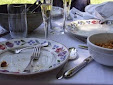
Re the picture: Query: Are the dishes work? Answer: Not for me. They're homemaking. And I must admit, I rather enjoy splashing round in the sink! But as for scrubbing the loo... blech. Counting for Nothing: What Men Value and What Women are Worth

Tuesday, July 9, 2013

How I came to own the philosophy of work-life balance naked, wet, at seven o’clock in the morning


I was in the shower, steam everywhere, when someone walked into the bathroom. I twitched open the shower curtains to peek and there was my four-year-old, sitting on the loo and swinging her legs. 'Hi Mum,' she said, 'we're going to the zoo. Are you coming?'

It was school holidays. My husband had taken two days off work to be with the kids and free me to study; apparently he was taking them to the zoo.

As the water pounded my back, I shook my head and said, 'No thanks, today I'll stay home and do some work.'

'Because it's more important,' she said wisely, then gave me a kind smile.

Such a dagger to the guts. I grew up in a house where my mother's work was more important than everything else, and didn't we know it. As children, we were given to understand that we were highly treasured and highly privileged; as such, other less privileged people needed her time more than we did, and we were never to complain. I often dreamed of having a stay-at-home mum, the sort of comfortable person who enjoyed being with me and who baked cookies. And yet, when I spent time with other people's stay-at-home mums, I often didn't feel very comfortable; and it wasn't actually something I wanted from the woman who was my mother. If she'd stayed home, she would have gone berserk, and driven me crazy in the process. She drove me crazy enough as it was.

But I resented the primacy of work in her life; everyone else knew her better than me. And my sister and I spent so much of our childhoods just waiting. We'd hang round church for hours, waiting for her to be done, and not allowed to leave without her; we'd hang around the house waiting for her sudden gallop through the hall, clutching a pile of papers and yelling at us to hurry up. We'd sit on the back step after school, hot, thirsty, and busting to pee, waiting for her to come home from wherever she was and let us in; for years, we couldn't have a key because she worried about 'latchkey kids'. (As to whether being a 'doorstep kid' is worse, I'm not sure; I certainly was happier when I could let myself and get a glass of water.)

I can see that the stressors on her were enormous. She was a ground breaker in her field and worked far more than full time, yet she was also never able to relinquish the idea of the 'proper mother'. Despite her work hours, she also tried to iron the sheets and make pizza from scratch and pretend that work had no impact on her children. I can see this and I feel sad for her; but I'm still not at peace with her choices. I have no problem with parents working, but they have to make good arrangements for their kids. So when my four-year-old asserted, very comfortably, that my work was more important than wandering around the zoo with her, I felt sick.

Was it true? I wondered. Did I really think my work was more important?

Well, when it came down to it, probably yes. She hardly needed both parents walking her through the butterfly house, and her dad would do a good job. I had spent the last three days fooling around with her, her sisters, and their assorted friends, and now I needed to do something different. On the other hand, working wasn't more important than spending time with her, per se; it was just more important right now. Such old scripts and philosophical knots one has to untangle in the shower while a four-year-old is staring fixedly at one's breasts!

All this reflection happened in a second or two. Then I said that work wasn't more important; but that what was important was to have balance. 'I need to play with you and read you stories a bit, and I need to work a bit, and I need to cook, wash and clean the house a bit. I've done lots of playing and reading and cooking and cleaning and washing this week, so now it's time for some working. And I can do this while you're at the zoo.'

'Okay,' she said, as her eyes travelled curiously up and down. It's too cold for regular nakedness in my house and I realised that it had been a while since she'd seen me undressed. She hopped off the loo, flushed, washed her hands, took one last good look, then wandered out of the bathroom.

So that was how I came to own the philosophy of work-life balance naked, wet, at seven o'clock in the morning. Meanwhile, with any luck, my four-year-old learned two things. One, that balance is important. And two, that some adult women have pubic hair.

Thanks to her dad for the photo of the hand and the butterfly!

Thursday, July 4, 2013

Learning to live with enough


Studying, school holidays, blah blah blah: sadly, I have nothing new for the blog. Instead, here's a piece I wrote for Zadok Perspectives No. 117. It was first published in the summer of 2013. The picture shows a selection of this week's gleaned fruit: persimmons, grapefruit, lemons, and cumquats. Another two kilos of grapefruit are in the veggie crisper. More than enough, even for grapefruit-loving me!

***

As a teenager I lived in the US, and I never became accustomed to the waste so many North Americans took for granted. It was epitomised by my youth group breakfasts. A boy would pick up a donut, take a bite, and throw the rest in the trash. A minute later, he'd pick up a second donut, a different flavour perhaps, take another bite, then throw that donut out, too. It never occurred to him that there was a cost involved in the donut, bigger perhaps that the dollar someone else had paid for it; or that there was a moral duty to eat it up; and when I, an awkwardly self-righteous Australian and newcomer in their midst, raised the issue, everyone looked at me askance.

He was, of course, only mimicking a wider society where restaurant servings were often double or triple what I considered enough, and where food – and everything – was thrown out with impunity. I recently read that 40% of all food produced in the United States is discarded, and that certainly tallies with my informal observations.

Before we become too smug, however, FoodWise estimates that Australians also chuck out a great deal: 180 kilograms of food waste per person per year. And it's not just food. How often do we send clothes to the op shop because we are, quite simply, sick of them? How often do we update our technology, our furniture or our cars, for no real reason? How rarely do we use things up, or wear things out?

And how much is enough? The population issues that place so much pressure on our planet circulate around this question. How much food, and what type? Is clean drinking water enough or must we drink filtered water from plastic bottles? How many cars, computers or lounge rooms do we really need? I know many women with forty or fifty pairs of trousers; could two or three pairs suffice?

At least until recently, there has been more than enough in the world to go around as long as the rich – and anyone reading this is rich – are willing to live with less. If we learned to live with enough, rather than the gross extravagance we take as the norm, then perhaps population wouldn't be such a pressing issue.

The Christian tradition offers a challenging perspective. The early church lived out a radical fellowship in which people lived from a common purse and learned to be content with enough. To each according to their needs, from each according to their gifts: this didn't originate with Marx but with the Acts of the Apostles. Yet most of us in the Christian church, let alone our society as a whole, have moved so far from this way of life that it is seen as deeply suspect.

Perhaps, though, it is time to revisit it. I am not advocating a radical communism instituted through violence from on high; but perhaps there are ways that we can practice sharing, and practice acknowledging that we have enough. Let me give you some examples from my family's small efforts.

My family eats many gleaned foods, and little meat. We are called to stewardship which implies a careful management of that which has been entrusted to our care. Thus I prioritise 'gift' foods – grapefruit overhanging a laneway, greens found on the roadside, a box of plums from a friend's tree – over bought foods; and when I am shopping, I prioritise local, sustainable or fair foods over others. We also grow what we can in our garden: leaves, nuts, fruits, herbs and, of course, eggs.

Our clothes are mostly second hand or made from organic or recycled fibres. As for how many, I am trying to find the point of 'enough', that is, where I still need to launder very regularly but do not have an underpants crisis!

We use bikes and public transport to get around. We do have a car, which we use as little as possible; over the years, we have been involved in informal car share networks so that other friends feel less pressure to purchase cars of their own.

Most of us own big possessions that are rarely used. Years ago, I belonged to a church with a resource directory. The family-sized tent, the trailer, the food dehydrator, the holiday house – whatever people were willing to share was placed on a list for others to borrow. It not only reduced the amount of stuff everyone owned; it also raised questions. Did neighbours need a deep freeze each or could they share one? Could they share a clothes dryer? Our society's wealth means that many of us have never had to learn how to share anything much more significant that the last slice of cake, but perhaps we could look back to the early church and teach ourselves again.

It's certainly easier to share when possessions are held lightly. For example, we have dozens of wine glasses: they are an annual gift from my husband's workplace and very useful. Friends feel they can borrow them when they have a party, and if some are smashed, then so be it. We also have many books, and years ago I realised that it was better to give them away, and be delighted if they came back, than to be hung up over their return.

These are just a few simple ways we can experiment with 'enough'. Few of us are ready for, or even called to, a radical discipleship where we sell all our possessions and give what we have to the poor; but we may as well practice sharing, right now, just in case the call comes.

And I'll let you in on a secret. Once we realise we have enough, something strange happens. A life which may have seemed short of just one or two things – always one or two things – is suddenly overflowing with riches. We may own fewer items, perhaps, but we learn to be grateful for them; and we become linked into a new community by engaging in the difficult and countercultural practice of sharing. Gratitude and friendship: what more could we ask? The truth of the matter is indeed counterintuitive: 'enough' is the real pathway to abundance.

Tuesday, June 18, 2013

From isolation to a crowd

The problem with having three kids is that for eight or nine years you get absolutely no time to yourself. Every moment is spent attending to somebody else's needs and, unless you are disciplined and supported, you will never be alone.

Thanks to my supportive and disciplined partner, we did make time every week for me to read, write, think, study – or just potter round an op shop in the hopes of finding equilibrium, or at least a pretty plate. Time alone was immeasurably precious, and absolutely necessary for me to keep my sanity.

This year, my youngest is in kinder for fifteen hours a week, my partner is still doing some school pickups, and I have more time than I can shake a stick at. Meanwhile, my kids have passed some threshold of childhood and, rather than spend all their time with me in the kitchen, now play together outside or at the other end of the house; and so even when there are kids around I often find myself alone.

You'd think this would be fantastic; and don't get me wrong, I'm not ungrateful. And yet, after almost a decade of feeling mobbed, I suddenly feel quite isolated. I spent so many years seeking out and cherishing those precious minutes of solitude that I assumed I am an extreme introvert – but now I finally have the time I thought I longed for, my own company is driving me crazy. I am going round in circles in my head and am assailed by doubt and when I see friends I feel socially awkward – how anyone can do a higher degree without going right out of their mind, I don't know!

Today I was affected to the point that I struggled to concentrate, and I had to wonder if studying is for me; instead of reading and living in my head for five hours a day – something I'm not sure I'm terribly good at – perhaps I should get a job and interact with people. And yet, I didn't come back to academia lightly; it took six months of conversations and discernment with family and friends to decide that, while it may not be the easy thing, it is the right thing for me to do, for now.

So rather inchoately and desperately I prayed something along these lines: 'God, you are asking me to do this and I have no idea why – but I have agreed and will do it. But how will I cope with the loneliness?'

Five minutes later, my phone beeped. It was an invitation to dinner on Friday night. Half an hour later, it beeped again: do I want to go to a concert on Thursday? I finished reading a chapter and opened my computer, expecting no more than the usual slew of subscriber and advertising emails, but an old friend I haven't seen forever had read my blog, and sent a message; another long lost acquaintance had emailed out of the blue; and a close friend was touching base about our Skype date on Sunday. A bit later, my phone beeped yet again: still another friend, reminding me of a gathering tonight that, while not social per se, promises some dynamic conversation with a group of interesting and thoughtful women. And then I received an invitation to a relevant seminar from a lovely woman I knew last year, who thought I might be interested in going along with her, 'given research is a lonely job'. I haven't seen her for six months, but here she was reading my mind.

From total isolation to feeling ever-so-slightly mobbed: I think God was having a little joke.

Thursday, May 30, 2013

Nothing to fear

Sometimes I am appalled by my fear. Take Tuesday. Tuesday is my big study day: I have the whole day to read, write and think. Because I study at home, I don't have to get anywhere before I can start work; and because my husband takes my kids to school and kinder, everyone is out of the house before eight o'clock. I don't want to waste time, so there I am at eight, in my pyjamas, reading at the kitchen table. I read hard, wrestling ideas out of academic articles, and making notes about which school of thought their ideas originate from, whether their arguments make sense, and what theses I can think of that might better fit their observations. I mine bibliographies, and track down articles which cite the articles I have read. I troll academic databases trying to locate research which might be interesting or useful; and I am always searching for the 'wormhole' article which will open up a whole new – but highly relevant – way of thinking, and conveniently list everything I need to read in its references. By noon I'm beat. My eyes are rolling uselessly in my skull; my brain is mush; my tummy is rumbling; and I realise I am still sitting in my smelly old pyjamas, at the kitchen table, yet feeling pressure to do more.

I take a shower, eat soup, and think about what to do next. Often I do read and write a little more, but let's be honest: after a four hour stint, I'm not taking much in anymore. The sun is shining, the breeze has a delightful autumn chill, the leaves are falling off trees and the avenues of our city, even in my suburb, are the stuff of picture postcards. I think sadly that I really must stay inside, reading; I have no right to enjoy this beautiful day…

Oh bother that grey old Protestant who pokes me in the ribs with her pointy umbrella! I am not trapped. Anyway, my brain is porridge, and we have run out of gluten free bread. There is one exceptional gluten free baker in Melbourne, and the nearest outlet is a few suburbs away. I ponder an elaborate scheme: I can get to the university library by bus and tram, thus justifying a late tram ride to buy bread before catching two busses home in time for tea. Then again, we're rather short of cash this year and I baulk at paying seven bucks for public transport… everything feels too hard.

But wait! I have a bicycle! I need exercise! I could take a lunch hour and go for a ride! But what route should I take? And then I am stalled again. Because I don't know how, exactly, to get there; I'll have to make it up. And this is too hard.

Every time I think of doing some even slightly out of the ordinary, my brain leaps ahead to worry about this and that; it shows me how difficult, even well-nigh impossible, it is. I dream up schemes, then block myself. Have you ever wondered what it's like to be naturally conservative? This is it – despite a lifetime of reflection, and despite a deep intellectual commitment to change my behaviour as necessary to reflect my ever-evolving values, I still feel anxious about the tiniest new thing: even riding to a place I have only accessed previously by car or public transport. I'm the person who'll meet you for brunch, and will eat to be polite; I won't tell you that I already ate at 7.30 the way I always do because I couldn't cope with skipping breakfast. And if such little things scare me, imagine how much moving house or changing school or learning about the way different people live make me feel anxious and afraid!

I have great empathy for other natural conservatives, even when I profoundly disagree with their ethics, their politics or their efforts to control the lives of others. People like us feel scared, even threatened, by difference and change; and this is why we can get aggressive about matters that are none of our business. It's no excuse, but maybe it helps if you understand that we are often acting out of fear, even when we are using the rhetoric of love. If you see a hint of aggression, an attempt to dominate, a truth claim brandished like a weapon, or violence, you will know: we are afraid.

The thing we conservatives rarely realise is that when we act out of fear we are doing damage not just to you, but to ourselves. When we box ourselves in time and again, we feel suffocated; yet out of fear we keep doing it, forgetting that new situations might be joyful, or helpful, or life-giving. My own truth claim, which I hope I share gently, is that we are called to act in love: love and respect for others, love and respect for ourselves – and we do this well when we step out of our comfort zones. What could we learn by stretching our wings a little? Perhaps we may learn a new respect for other people and how they do things. Perhaps we may learn that the world is far bigger than us and in that wonderful expansiveness there is room for many points of view. And perhaps we may simply learn that the sun is shining, our bodies are strong, life is joyful and we don't have to sit at the kitchen table in our pyjamas all day; we have time to do more than Get Things Done.

This Tuesday, I finally realised fear was trying to trap me, again; and then I admitted to myself that sore eyes and a mushy brain were not going to help me learn anything more. The sun winked through the window and then poked me in the eye, laughing; the wind called my name. I whistled at my fear, grabbed my panniers, jumped on my bike, and headed off. I rode through quiet streets, surfing over speed humps, then veered off into a great avenue of deciduous trees. For once, I wasn't towing a child; my bike flew through the orange and brown leaves dancing in the streets. I headed towards the creek and trundled along the bike path, standing on my pedals to power up each hill and then cruising down the other side. I rode past a school. All the kids were out, playing, and I grinned as I realised I was having so much fun, I had overshot. I turned off the bike path, and slipped back through a couple of streets to get to my destination.

I was heading to an independent natural foods supermarket. At one o'clock, it was packed, and I was elated to see that not every cent in Australia is going into the duopoly that dominates grocery spending. I roamed the store, greeting familiar staff and picking up bread, cheese, yogurt, cucumbers, and a few other things besides. Panniers stuffed to overflowing, I headed home a completely different, also beautiful, way. I realised I could ride there every day for months and go a new route every time; there was so much to see!

Less than an hour after I had left, I arrived home breathing hard and beaming. The sun on my back had relaxed knotted muscles; the wind had blown away all cares; my mind was as clear as it gets; my eyes were rejuvenated and ready to read; and I was in love with my life once again as I realised that there was nothing, absolutely nothing, to fear.

Monday, May 20, 2013

The State Library and the Great Unwashed

I'm sitting in the State Library reading about public health, but it's hard to concentrate. Something smells, really smells: it is the penetrating odour of the great unwashed.

Stomach-churning tendrils ease their way up my nose and I push my breathing high to bypass the olfactory nerves. I look around, but there is no homeless person to be seen. No dreadlocks, no stained old coats, no sleeper at a desk hinting at the origin of the smell.

Annoyed, I turn back to my book. I have a few hours without my kids, and I'm using the time to learn about health and its relationship to social status; but this stink makes it impossible. How can I concentrate when the room smells of urine and muck? And where is the smell coming from?

I keep reading, and breathing carefully, and furtively looking round. Finally I realise that the person is long gone; only the smell remains. It rises from my chair. As my thighs warm the padded seat, the unleashed odours float upwards.

Revolting.

There are no other seats, and I need to read. My jeans are thick and easily washed, so I curse and turn the page.

There I sit: nice jeans, styled hair, warm leather boots, ethically made t-shirt; my heavy winter jacket is draped over the back of the chair; and I am reading that a poor black man in Washington DC can expect to live 20 less years than a rich white man living a dozen miles up the railway line in suburban Maryland.

As I tut-tut over the dying men of DC, a few real DC faces flash before my eyes. Uri, the lean Russian man who slept on the steps of our church. Miss Rosa, the recipient of a food charity program with whom I often chatted in a putrid stairwell. Melvin, the security guard, shot in the shoulder while patrolling our church car park, an injury so common in his milieu he never thought to mention it to his employers.

What a hypocrite! Here am I with all the money, leisure and opportunity in the world, thinking I have compassion because I will read about the social factors of health; but the latent smell of homelessness makes me outraged. Yet until I recognise that the smell belongs to a real person as individual as Uri, Miss Rosa, or Marvin, and as precious in God's eyes as one of my own children, my readings in public health will be little more than a self-congratulatory exercise; very much worse than useless.

In shame I say a prayer for compassion, inhale deeply, and stay seated.

Wednesday, May 8, 2013

An evening ride

The other night, kids in bed, I went to visit a new acquaintance. We had things to talk about over a pot of tea. At 8 o’clock it was becoming dark, and I wondered about driving. But for reasons neighbourly, political and environmental, I try to minimise my use of the car. I’ve given up waiting for everyone else to drive less. Instead, as much as possible in a city built for car travel, I ride or catch public transport to get about.

But when it’s dark out, I often find myself wavering. Too many of my friends have been hit by cars for me to ever feel entirely safe on a bicycle; yet the pot of tea awaiting me was a bit too far away for me to walk.

I thought of the car with longing: so quick, so comfortable, so safe. But with a sigh I recalled my commitment. I affixed my lights, strapped on my helmet, and headed out.

The night was cool. As I rode down the street, pedalling steadily, my limbs began to loosen up. The heat of the day was dissipating in a slight evening breeze coming in from the south. I rode along in a perfect state of warm body – cool air: utterly comfortable.

The night was quiet. Once or twice a car cruised by; once, I overtook a man on a squeaky bike. A couple of pedestrians were out walking their dogs. I passed a jogger and heard him puff. A fruit bat erupted out of a tree and flew away heavily. But mostly, it was just me. Me and the night and my thoughts.

The night was fragrant. Every block I rode into a new wall of scent, inhaled deeply once or twice then left it behind. Jasmine, fig, eucalyptus, and many I could not identify. I had ridden the same streets earlier the same day, and had smelled nothing; now, the air was redolent.

I arrived at a softly lit house pregnant with the hush of sleeping children. I parked the bike and locked it up – no engine noise, no big headlights, no electronic beep; then I softly knocked and tiptoed in. The mother made an evening tea. We sat and allowed the conversation to unfurl from the shadows. Small tendrils of talk floated into the lamplight then gently dispersed. It was good.

The night deepened and I left. I rode home a different way, zigzagging past the streets and homes of friends and acquaintances and nodding a blessing towards each one. A sense of exhilaration filled me as bone, muscle and sinew worked together to whisk me along. I revelled in the quiet and the dark, and my olfactory nerves delighted in every rich fragrance.

This, surely, is prayer embodied: gratitude and joy and delight; attentiveness to my body, this bike, and the world all linked in perfect union; and the sure and certain knowledge that I was in the right place at the right time, as I cycled through the night.

Insulated in the ton of metal that is my car, I would have travelled quicker. And the headlights would have seared into the darkness; the intake would have filtered out the scent of jasmine; the comfortable seat would have given me no sense of strength or embodiment; the speed and need to concentrate would have prevented me nodding blessings on my way.

They say life is a journey. I say the journey, done well, gives life.

Related Posts Plugin for WordPress, Blogger...